Recycled Plastic Compost Bins — Maintenance-Free, Long-Lasting
Heavy-Duty Recycled Plastic Compost Bins for Allotments, Schools & Gardens | British Recycled Plastic
Unlike lightweight plastic bins from garden centres, British Recycled Plastic’s heavy-duty compost bins are built from solid, high-performing recycled plastic and designed to last 25+ years with zero maintenance — making them the first choice for serious gardeners, allotments, schools and community growing projects.
Weatherproof and high-performing, our large compost bins won’t rot, warp or splinter like typical timber options. The black compost bins as a thermal store, efficiently absorbing environmental heat far better than treated timber. This helps speed up the composting process, making your garden more productive, faster!
British Recycled Plastic is a trusted UK manufacturer and supplier of recycled plastic compost bins, providing high-quality, long-lasting products made from British recycled plastic waste.
Which compost bin is right for you?
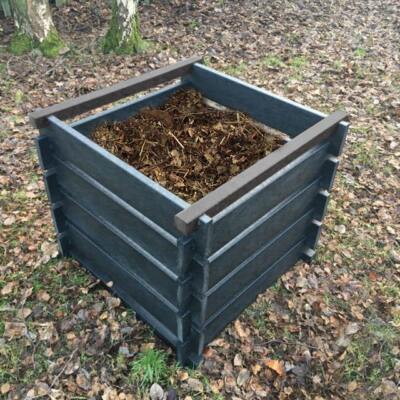
For small gardens or beginners and those just looking to compost kitchen waste, the Redacre (900 × 900 × 800 mm) is a convenient and compact compost bin for kitchen and garden waste.
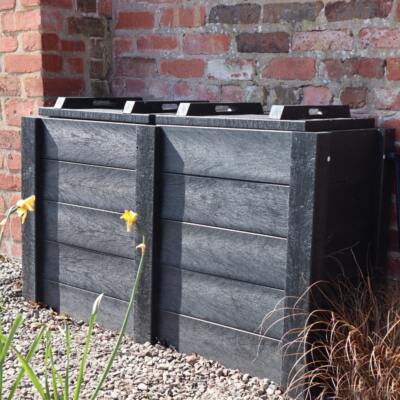
Allotments, schools and larger gardens will benefit from a large-volume compost bin like the Callis where continuous composting is needed. Callis is our heavy-duty compost bin and features removable slats at the bottom to allow for easy access to fresh compost.
Urban gardens or those with limited space should opt for the Compact Callis. This narrow compost bin is ideal for balconies and small patios where space is tight.
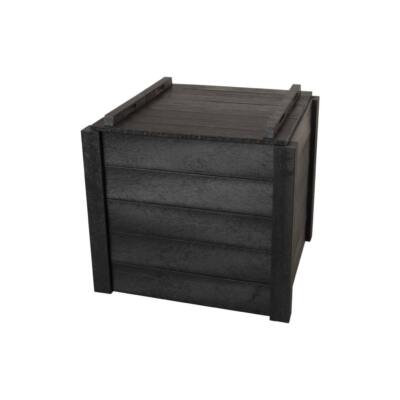
You’ll also have the option to purchase lids for our Callis compost bins to prevent fly or pest issues in shared or public outdoor spaces.
Shop British Recycled Plastic Compost Bins UK
Heavy-Duty Compost Bins: Recycled Plastic vs Wood
| Feature/Metric | Traditional Timber (Treated Softwood/Hardwood) | British Recycled Plastic – Premium Recycled Polyolefin Blend |
|---|---|---|
| Maintenance | High. Annual staining, sanding, varnishing and chemical treating needed. | Zero. Never needs painting, staining or oiling. Easy to clean with basic washing. |
| Lifespan & Durability | 5–10 years is typical, even with regular treatment. Rots, warps and cracks. | 25+ years guaranteed. Impervious to rot, insects, frost and damp. Will not crack. |
| Safety | Splinters over time and cracks, creating liability risk. Absorbs moisture, encouraging moss. | 100% splinter- and crack-free. Non-porous — does not absorb water, resists moss and algae. |
| Vandalism & Fire | Vulnerable to carving, surface damage, spray-painting, or ignition. | Graffiti easily washes off with solvent. Highly resistant to surface burns. |
| Environmental Impact | Relies on felling trees, contributing to deforestation and loss of carbon-storing woodland. Needs repeated replacement over time. | Made from recycled UK plastic waste — keeping trees in the ground and plastic out of landfill. Fully recyclable at end of life. |
| Total Lifecycle Cost | Low purchase price but high recurring costs: treatment, replacement parts, and labour. | Higher upfront cost but zero ongoing maintenance. Lower whole-life ownership costs due to minimal maintenance and replacement requirements. |
How to get started with composting
If you’re new to composting, you’ve probably got a lot of questions about how to get started. Especially what can actually go in the compost bin.
The best compost comes from a 50/50 mix of green and brown materials. Green waste includes nitrogen-rich vegetable peelings, coffee grounds, grass and tea bags. Brown waste is carbon-rich. Think cardboard, paper, dry leaves and straw.
Never add dairy, fish or meat to your compost. These materials are prone to attracting pests and ultimately slow down the composting process.
In order to get the decomposing process started as quickly as possible, it’s a good idea to place your compost bin directly over the soil. That way, worms can enter from underneath to help break waste down.
We also recommend putting the bin in a sunny spot. Unlike cheap garden centre options or timber compost bins, British Recycled Plastic’s compost bins are specifically created with black recycled plastic as this helps to absorb heat and speed up the decomposition process. Try to avoid a fully shaded spot.
After 3-6 months of adding to your compost bin (cold composting), you’ll have usable product. If you’re looking for quicker turnaround, hot composting — turning the pile regularly and maintaining the right green/brown balance — can produce usable compost in as little as 6–8 weeks.
You’ll know your compost is ready when it becomes dark, crumbly, and earthy-smelling. The material should no longer look like the original waste you added into it.
When the compost is ready, you can use it on beds and borders as a soil improver or mulch.
Compost Bin FAQs
How do compost bins work?
British Recycled Plastic compost bins transform kitchen and garden waste into nutrient-rich compost. They provide a weatherproof, durable, and eco-friendly solution for reducing landfill waste, enriching soil, and promoting sustainable gardening—all while being made from 100% recycled materials.
What can I put in a compost bin?
You can compost vegetable and fruit peelings, tea bags, coffee grounds, grass cuttings, garden prunings, cardboard, paper, dry leaves and straw. Avoid meat, fish, cooked food, dairy products and anything with oil — these attract pests and create unpleasant odours. British Recycled Plastic’s heavy-duty compost bins have a sealed base option (Callis lids) which helps manage pest access if you’re composting in a shared space.
Are compost bins good for the environment?
Yes, compost bins are excellent for the environment, especially when you choose a sustainable compost bin like those from British Recycled Plastic.
Composting bins for garden spaces reduce landfill waste, recycle nutrients, lower your carbon footprint and support biodiversity. Our garden compost bins are made from 100% recycled materials, too.
Composting is a simple, effective way to reduce waste, improve soil health, and support environmental sustainability.
Where should I put my compost bin?
Place your compost bin directly on soil where possible — worms will enter from underneath and speed up decomposition significantly. Choose a spot with some sun exposure. British Recycled Plastic’s black recycled plastic bins act as a thermal store, absorbing more heat than a timber box or green plastic bin, which speeds up the composting process. Avoid placing directly against a fence or wall, as you’ll need to access it periodically.
How long will my compost bin last?
Our garden compost bins last for decades. We’re so confident in our products that we offer a 25-year guarantee.
How long does composting take?
Cold composting (adding material and leaving it) typically takes 3–6 months. Hot composting — turning the pile every 1–2 weeks and maintaining a green/brown balance — can produce finished compost in 6–8 weeks. Temperature is a big factor, which is why the heat-absorbing properties of a black bin are a practical advantage, particularly in the UK climate.
Are recycled plastic compost bins microplastic-free?
Yes, we take recycled household waste and convert it into a durable, high-density material to make garden compost bins. This means there are no microplastics or shedding.
Can I use a garden compost bin in small spaces?
Yes, composting needn’t take up much space. The Redacre compost bin is a single, open compost bin that is perfect for smaller gardens or those only composting kitchen waste. The Callis Compact Narrow compost bin is another smaller compost bin for limited space. Perfect for balconies and urban gardens, the Callis Compact compost bin also has optional lids available.
Can I compost in the winter?
Yes. Decomposition slows in cold weather but doesn’t stop. British Recycled Plastic’s recycled plastic bins are frost-resistant and unaffected by freeze-thaw cycles — unlike timber boxes, which can crack and warp in winter. You can continue adding to the bin throughout winter and the pile will pick up pace again in spring.
What’s the best compost bin for beginners?
The best compost bin for beginners is the Redacre compost bin. This single, open compost bin is perfect for smaller gardens and those predominantly using kitchen waste.
What size compost bin do I need?
For a household composting kitchen and garden waste from a small to medium garden, the Redacre (900 × 900 × 800mm) is sufficient. For larger plots, allotments or continuous composting where you want access to finished compost at the bottom while adding new material at the top, the Callis is the better choice. A two-bin system is worth considering if you’re generating consistent volumes — one bin actively composting while the second holds finished compost ready to use.
What is a two-bin compost system?
While single-bin composting works for many people – especially those with smaller gardens – a two-bin system allows continuous composting, so you don’t have to wait for one pile to completely decompose before starting another.
Fibrous materials that are slower to decompose can be removed from one compost bin when you are ready to finish the current pile, and placed in the adjacent bin with new compost. Two bins also allow you to store finished compost as required, so you have a working pile for new materials, and ready compost when needed.
Do compost bins need a lid?
A lid isn’t essential for composting, but it helps in three situations: if you have pest problems (rats or flies), if you’re composting in a shared outdoor space, or if you’re adding a wider range of food waste. The Callis range has optional lids available. The Redacre is an open-top design, which allows rainfall in — this can be an advantage as it keeps the pile moist, but a cover may be useful in very wet conditions.
Can I bulk order compost bins?
If you’re looking to buy heavy-duty compost bins for garden community projects, allotments or at school, we offer a bulk order option.