
Recycled Plastic Tongue and Groove Boards
British Recycled Plastic tongue and groove boards are manufactured from a premium-grade, high-density recycled plastic compound — a step up from standard recycled plastic lumber in rigidity, surface finish and spanning capability. The result is a structural cladding board that interlocks flush, holds its shape in all weathers, and never needs painting, treating or replacing.
Available in two profiles: 28 × 147mm and 34 × 147mm.


Please Read Before Ordering:
Artificial lumber can replace traditional timber or metal in just about any situation. However, it has different structural characteristics, so it must be installed using the correct guidance, factoring in span and thermal movement to ensure proper performance.
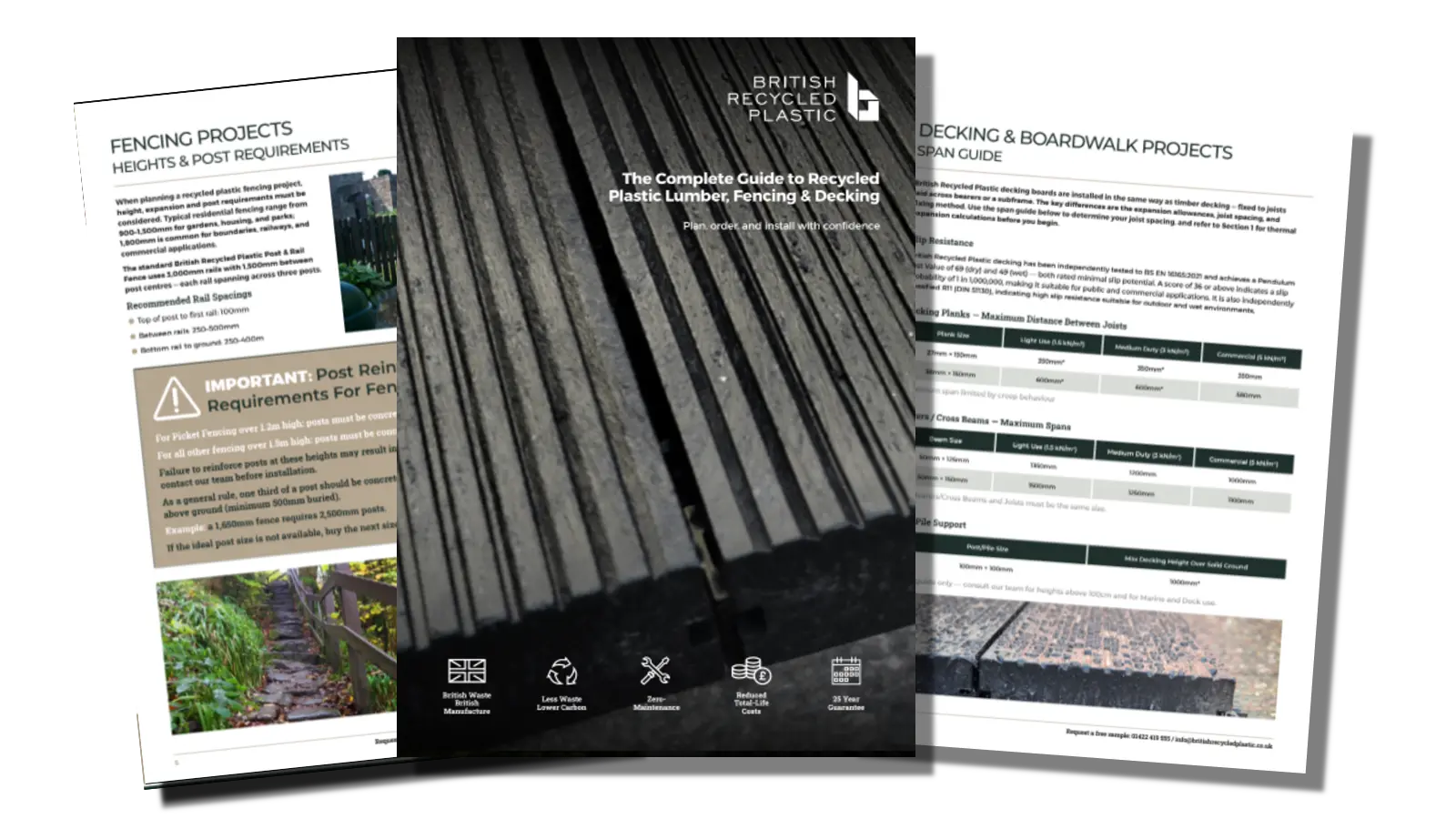
Read ‘The Complete Guide to Recycled Plastic Lumber, Fencing & Decking‘ before ordering and installing.
You can also view our Lumber FAQs videos for more help.
What Are Recycled Plastic Tongue and Groove Boards?
Tongue and groove boards are profiled planks with a protruding ridge (tongue) along one edge that slots into a corresponding channel (groove) on the next board. This interlocking joint creates a continuous, flush panel surface without exposed fixings — used for cladding, fencing, partitions, gates and animal enclosures.
British recycled Plastic tongue and groove boards are not standard recycled plastic lumber. They’re made from a higher-density, more homogeneous compound, which gives the boards greater structural rigidity, better spanning capability and a cleaner, more uniform surface finish than standard mixed-plastic profiles.
These boards are not a decking product. If you need decking or boardwalk boards, see our recycled plastic decking page. Tongue and groove boards are for vertical and horizontal cladding applications where a flush, interlocked panel is the goal.
Where Are Tongue & Groove Boards Used?

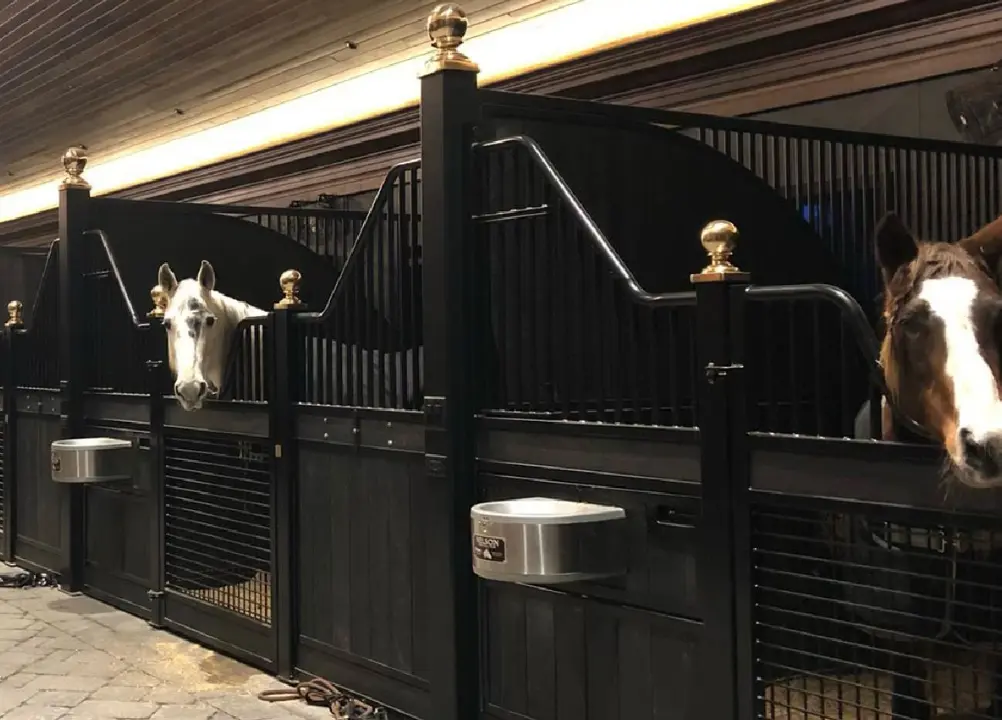
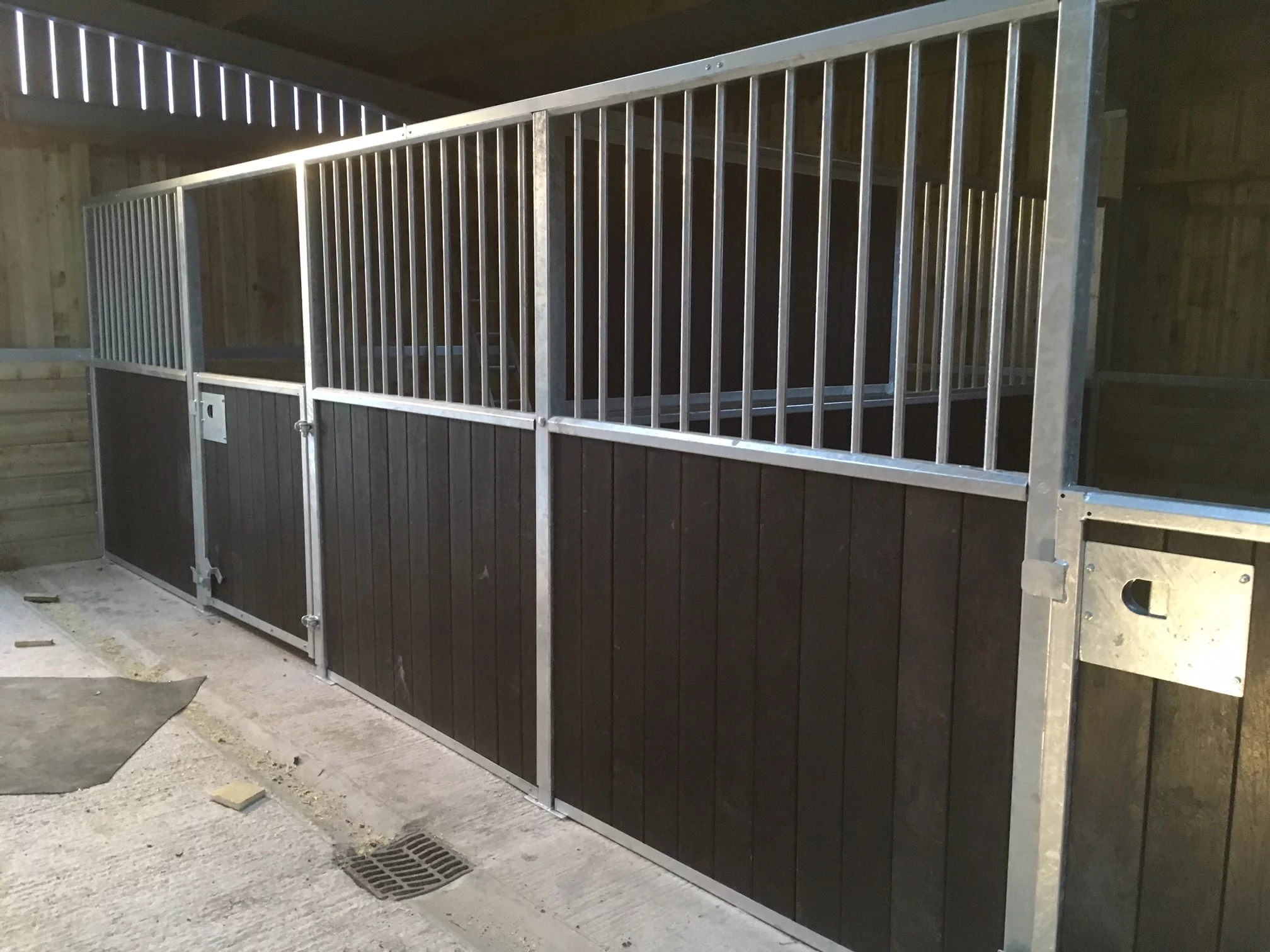
Stables, animal stalls and equestrian buildings
Horses are known to chew timber boards — particularly in confined spaces — and urine soaks into the grain, causing rot from the inside out. Steel and galvanised sheeting corrodes when exposed to the ammonia in horse urine. Neither problem applies for recycled plastic.
The dense, non-porous surface offers nothing to bite into, will not splinter and is completely inert to horse urine. The boards can be pressure-washed clean and will perform identically in fifteen years as they do on day one.
British Recycled Plastic tongue and groove boards are also widely specified for stable partitions, animal stalls, kennel cladding, and livestock enclosures for the same reasons: zero maintenance, a hygienic washable surface, nothing to splinter, nothing to rot.
Fencing panels and privacy screening
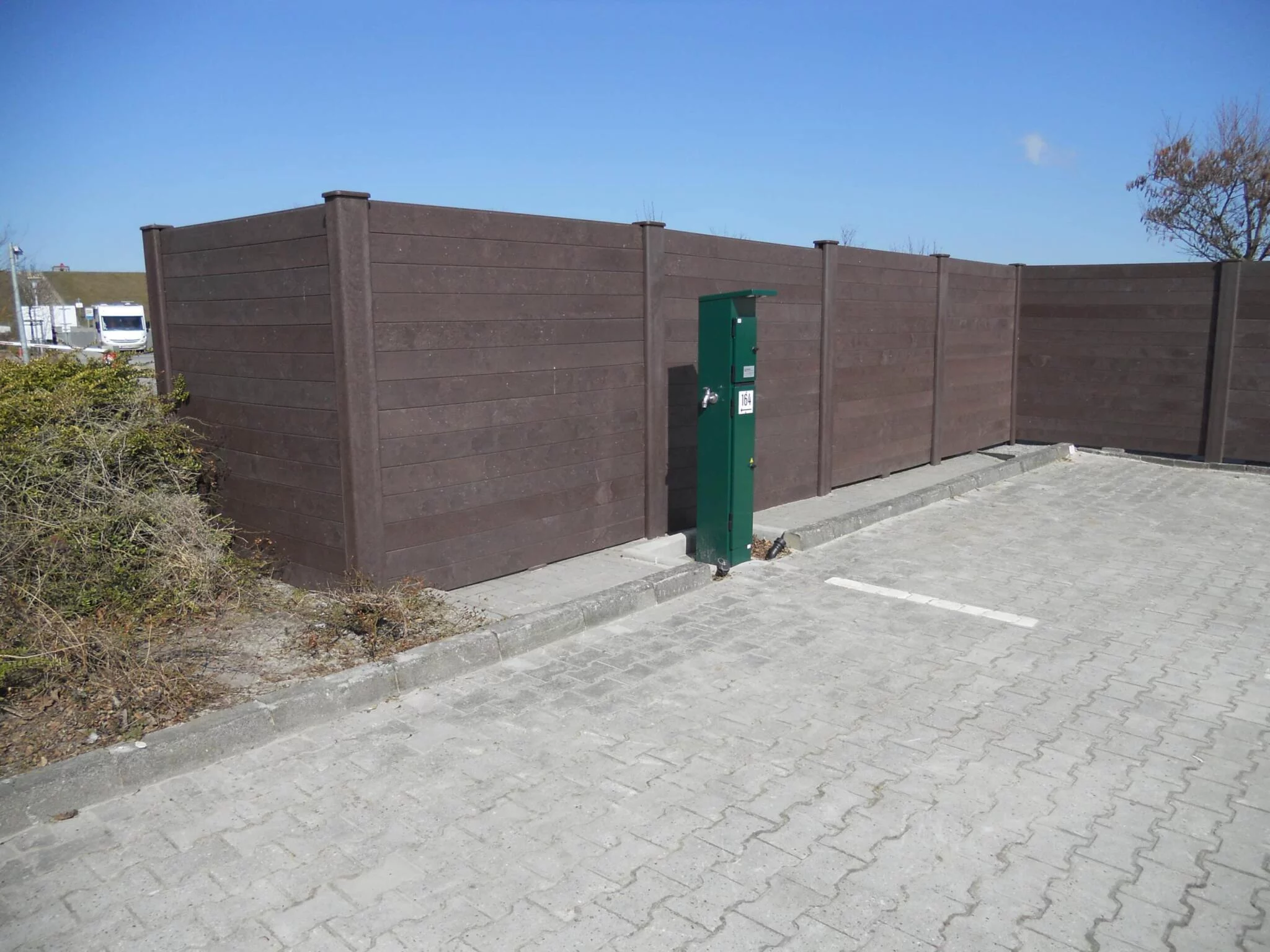
Standard recycled plastic fence rails have a practical height limit of approximately 1.8m above ground — beyond that, the flexibility of the material becomes a design consideration. Tongue and groove panels work differently. Because the boards are slotted horizontally into channels in the support posts rather than spanning between them as structural rails, they can be used to create panels well above 1.8m without the same constraints. The posts carry the structural load; the boards simply fill the panel.
This makes recycled plastic tongue and groove the right choice for tall privacy screening, secure perimeter fencing and high-sided animal enclosures where a standard post-and-rail system would not reach.

Garden buildings and shed cladding
Tongue and groove is the traditional profile for shed and outbuilding cladding — and recycled plastic eliminates every maintenance headache that comes with the timber version. No painting every two years, no swollen boards that won’t close the door, no rotting at the bottom course. The boards retain their profile and their fit regardless of rain, frost or sun.

Boardwalks, footpaths and waterside structures
The water resistance of our Tongue and Groove Boards makes them well-suited to boardwalk edging, footpath kerbing, jetty cladding and any structure near water. The material is non-porous and frost-resistant, and the interlocking joint prevents water ingress between boards.

Gates and panel infill
The flush face of a tongue-and-groove panel makes it ideal for gate infill and framed privacy panels where a clean, solid surface is needed without the weight and upkeep of timber.
Why Choose Tongue & Groove?
British Recycled Plastic tongue and groove boards are manufactured using our strongest and most refined recycled plastic compound. Unlike standard mixed-plastic lumber, it is a more homogeneous blend — the material is consistent throughout, which gives better dimensional accuracy, improved structural performance and a higher-quality surface finish.
Key material properties:
- Waterproof — non-porous at all temperatures; will not absorb moisture
- Frost-resistant — unaffected by freeze-thaw cycles
- UV-stabilised — colour and surface integrity maintained in prolonged direct sun
- Resistant to algae, fungi and mould — no organic content for growth to feed o
- Resistant to oils, acids and brines — suitable for equestrian, agricultural and coastal environments
- Splinter-free and non-toxic — safe for animals, children and public spaces
- Premium surface finish — high-quality texture that gives the clean appearance of traditional wood panelling, without any of the upkeep
The joint distributes load across the panel
In a standard board-on-board structure, each board is individually fixed and carries load independently. In a tongue and groove panel, the boards lock together — the panel acts as a unit, distributing load across its full surface rather than concentrating it at individual fixing points. This is particularly valuable where impact resistance matters, such as in stable partitions and animal enclosures.
A flush fit that stays forever flush
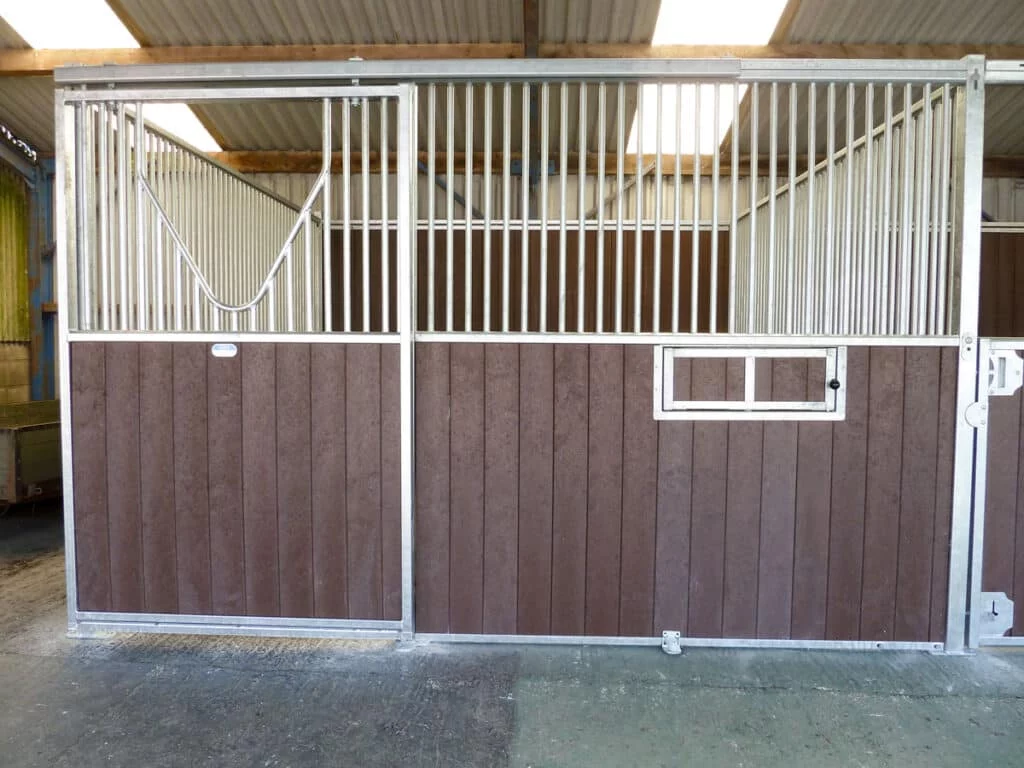
Timber tongue and groove is well-known for joint failure: boards swell in wet weather, gaps appear in dry weather, and the joint gradually works loose over years of seasonal movement. Recycled plastic does not absorb moisture, so the boards do not swell or shrink. The joint maintains its fit throughout the year and across temperature changes — a flush, gapless panel that looks the same in January as in August.
Wider spans without sagging
The density of British Recycled Plastic Tongue and Groove boards allows them to bridge wider gaps between supports than standard recycled plastic profiles of equivalent thickness — meaning fewer intermediate fixings and a cleaner finish.
Recycled Plastic Tongue and Groove Boards vs Timber
| Feature/Metric | Traditional Timber Tongue & Groove | British Recycled Plastic Tongue & Groove |
|---|---|---|
| Maintenance | Regular painting and treating required | Zero — wipe down with soapy water |
| Lifespan | 5–10 years before rot and joint failure | 25-year guarantee |
| Joint Integrity | Swells in wet, gaps in dry — joint works loose | Non-porous — joint holds its fit year-round |
| Horse Chewing | Common problem — timber splinters under chewing | Horses do not chew this material; no splinters |
| Urine resistance | Absorbs ammonia and rots from inside out | Completely inert — pressure-wash clean |
| Panels above 1.8m | Standard with timber posts | Achievable with T&G boards slotted between recycled plastic posts |
| Splinters | Splinters as it degrades | 100% splinter-free |
| Environmental Impact | Requires regular replacement over its lifetime | Made from recycled UK plastic waste; 25-year+ lifespan |
Profiles & Product Codes
All four colours (Black, Grey, Brown, Beige) are available for full standard lengths. Cut lengths are available in Black and Brown. Custom lengths are available — call us
28mm × 147mm — standard stock lengths: 3600mm
| Code | Length | Colour |
|---|---|---|
| INT951BLK | 3600mm | Black |
| INT951GRY | 3600mm | Grey |
| INT951MBR | 3600mm | Brown |
| INT951SBG | 3600mm | Beige |
34mm × 147mm — standard stock lengths: 2600mm and 3050mm
| Code | Length | Colour |
|---|---|---|
| INT035BLK | 2600mm | Black |
| INT035GRY | 2600mm | Grey |
| INT035MBR | 2600mm | Brown |
| INT035SBG | 2600mm | Beige |
| INT938BLK | 3050mm | Black |
| INT938GRY | 3050mm | Grey |
| INT938MBR | 3050mm | Brown |
| INT938SBG | 3050mm | Beige |
34mm × 147mm — cut lengths (Black and Brown only)
| Code | Length | Colour |
|---|---|---|
| INT900BLK | 1245mm | Black |
| INT900MBR | 1245mm | Brown |
| INT901BLK | 960mm | Black |
| INT901MBR | 960mm | Brown |
| INT902BLK | 1220mm | Black |
| INT902MBR | 1220mm | Brown |
Technical Specifications
| Property | 28 x 147mm | 34 x 147mm |
|---|---|---|
| Standard lengths | 3600mm | 2600mm / 3050mm |
| Colours (stock lengths) | Black, Grey, Brown, Beige | Black, Grey, Brown, Beige |
| Thermal expansion | 0.109mm/m/˚C | 0.109mm/m/˚C |
| Water absorption | <1% | <1% |
| Dimension tolerance | ±3% | ±3% |
Ordering & Installation
Tongue and groove boards must be ordered by phone or via the project quote form — they are not available to buy online.
You can call us on 01422 419 555 or submit a project quote.
Minimum order: £400+VAT across your whole lumber order. We can supply in standard lengths or cut to your requirements. Provide a cutting list in metric units: profile code, quantity and lengths.
For full delivery, pallet space and offloading guidance, see the Lumber Buyer’s Guide.
Installation notes
Fixings: Use stainless steel, brass or plated fixings only — standard steel will corrode. Pre-drill all holes.
Thermal expansion: British Recycled Plastic tongue and groove boards expand and contract at 0.109mm per metre per °C — the same rate as our standard lumber profiles. Allow appropriate expansion gaps at board ends and use slotted brackets or elongated fixing slots on longer runs. For the full expansion calculation method, see our Lumber Buyer’s Guide.
Height above ground: Because the boards slot into grooves in the support posts rather than spanning between them as structural rails, tongue and groove panels can reach beyond the 1.8m height limit that applies to standard recycled plastic fence rails. Post depth and concreting requirements still apply — see our fencing installation guidance for post rules.
Tools: Standard woodworking tools — circular saw, drill, hand saw. No specialist equipment required.
Have a question?
Call: 01422 419 555
Email: info@britishrecycledplastic.co.uk