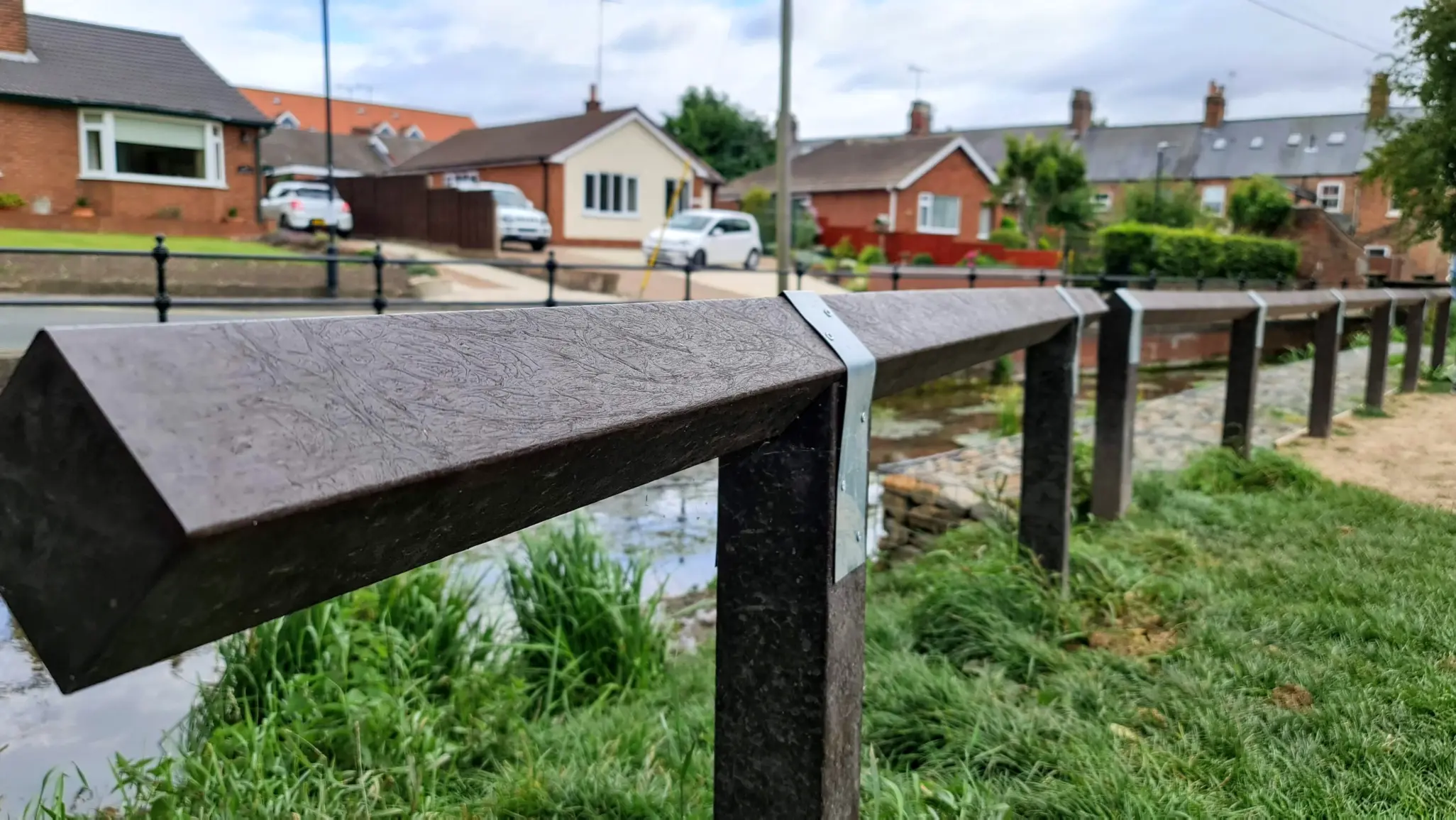
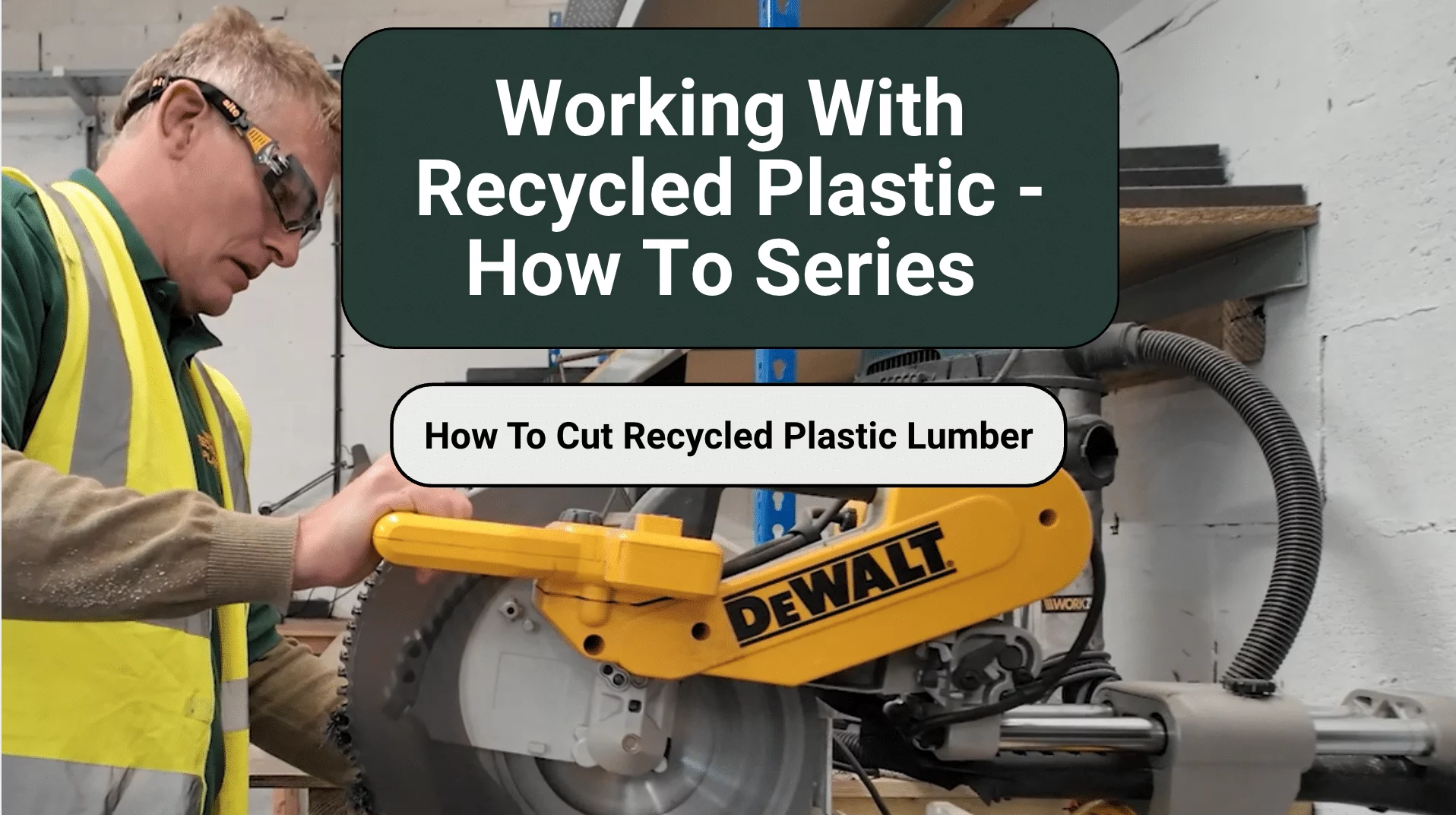
Whether you’re making raised beds, decking, or outdoor furniture, you’ll need to cut recycled plastic lumber to size. There’s one tool we recommend that makes cutting plastic wood as smooth as timber. You can create compound angles, square cuts, and chamfers all with this tool.
What Is The Best Way To Cut Recycled Plastic Lumber?
To cut recycled plastic lumber smoothly and accurately, we recommend a mitre saw. Its adjustable speed makes it versatile for many materials and allows for cutting plastic lumber at different angles.
What speed should I use?
Use the saw at a medium-high speed when cutting plastic lumber.
Mitre Saw Maintenance For Cutting Plastic Lumber
To cut recycled plastic lumber smoothly, the blade must be sharp, so it’s a good idea to have two blades on rotation. That way, while one is being sharpened, your project can continue smoothly. While this recurring maintenance does cost, it is more cost-efficient than fully replacing the blades each time.
Day-to-day, try to keep the blade clean and free from build-up. The heat produced from the saw’s rotations will, at times, melt some of the plastic onto the saw face, which you’ll need to remove. A quick clean between cuts can make a big difference in how it feels to cut plastic lumber and the end result.
With the right setup, cutting plastic lumber is as clean and consistent as cutting timber.
Our artificial lumber is sustainable and designed to last decades without rotting, splintering or degrading. It’s the perfect alternative to timber, and comes with our 25-year guarantee.
If you’re looking to start a new building or gardening project, browse our full range of recycled plastic lumber planks, or contact us for guidance, quotes or technical advice. We also have a handy installation guide.
Written by the British Recycled Plastics Team
April 2026
Recycled plastic lumber is a long-lasting, low-maintenance alternative to traditional timber, manufactured from 100% recycled plastic materials. Designed for durability, it resists rot, moisture, insects, and weather damage, making it ideal for outdoor uses such as decking, fencing, garden furniture, and landscaping structures. Unlike wood, recycled plastic lumber does not require painting, staining, or ongoing treatment, reducing both maintenance costs and labour over time.
As a sustainable building material, British Recycled Plastic’s goal is to help divert waste from landfills and support a circular economy, transforming used plastics into high-performance construction products. It offers the natural appearance of wood while delivering superior longevity, making it a practical and environmentally responsible choice for residential, commercial, and public space projects.
The best fixings for plastic lumber, and the only fixings we recommend at British Recycled Plastic, are stainless steel bolts and screws. Whether that’s for boardwalks, platforms or anything else. Nails, staples and other fixings won’t bite into the material, correcting and will quickly need replacing.
We advise against burying a screwing plastic lumber directly because stainless steel screws are relatively soft for the extremely dense plastic. Driving a screw straight in without a pilot hole could cause the screw to strip, snap or bind too tightly, making it difficult to remove later down the line. A simple pilot hole removes this risk, making installation far easier.
How To Properly Size A Pilot Hole
When you drill plastic lumber, the pilot hole should match the diameter of the screw shank – not the thread. This ensures the screw goes in smoothly without excessive force and provides a clean and consistent result every time.
You can find out more detailed information on cutting, drilling and screwing plastic lumber in our British Recycled Plastic guide.
Yes, British Recycled Plastic can cut your material to your specified sizes for a small charge (see price list).
Recycled Plastic and Composite materials typically combine different elements, like wood fibres and plastics, for enhanced strength and durability. However, due to their composition, composites can’t be easily recycled. On the other hand, recycled plastic, like that from British Recycled Plastic, originates solely from reused plastic, making it fully recyclable and a more sustainable choice. It lasts longer, offers eco-friendly benefits, and can be continually recycled, minimizing environmental impact. Choose British Recycled Plastic for durable, sustainable solutions that make a lasting difference.
British Recycled Plastic is made from 100% uk plastic waste.
Our recycled plastic is made with a wide variety of plastic waste products from industrial, commercial, agricultural and domestic sources. These materials are shredded, melted and mixed together to create our incredibly strong plastic lumber.
The most common plastic types used are High Density Polyethylene, Low Density Polyethylene, Polypropylene and Polythene. These are all members of the Polyolefin family, so mix well together at the same temperature.
These materials form 99% of the content. They are mixed with 1% masterbatch, for colour control, which is also made from entirely recycled material.
Recycled plastic lumber is a sustainable alternative to timber is is typically just as strong, if not stronger than wood. It is widely used in applications where timber would traditionally be used however, due to its dense, non-porous composition, it is longer-lasting and low maintenance. Unlike wood, British Recycled Plastic lumber won’t rot, splinter, split or warp.
British Recycled Plastic provides plastic lumber to a wide variety of businesses. Plastic lumber is used in landscaping and construction applications, including raised beds, retaining structures, outdoor seating, edging, and decking substructures. It provides a durable alternative to timber, particularly in ground-contact or wet environments.
British Recycled Plastic lumber can be cut and drilled like hardwood, but please be aware that this means you will go through blades and drill bits more quickly than if you were working with treated pine.