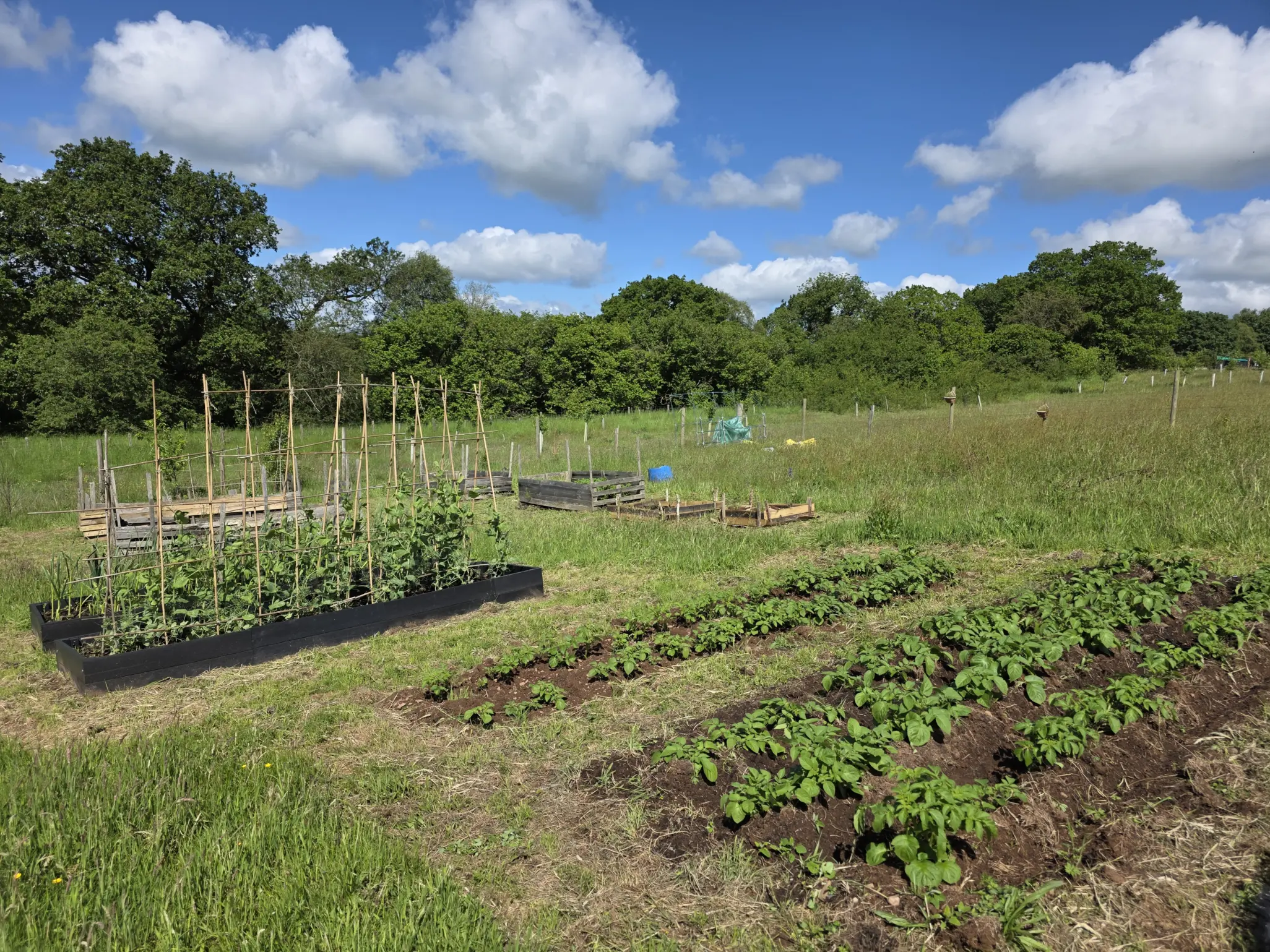
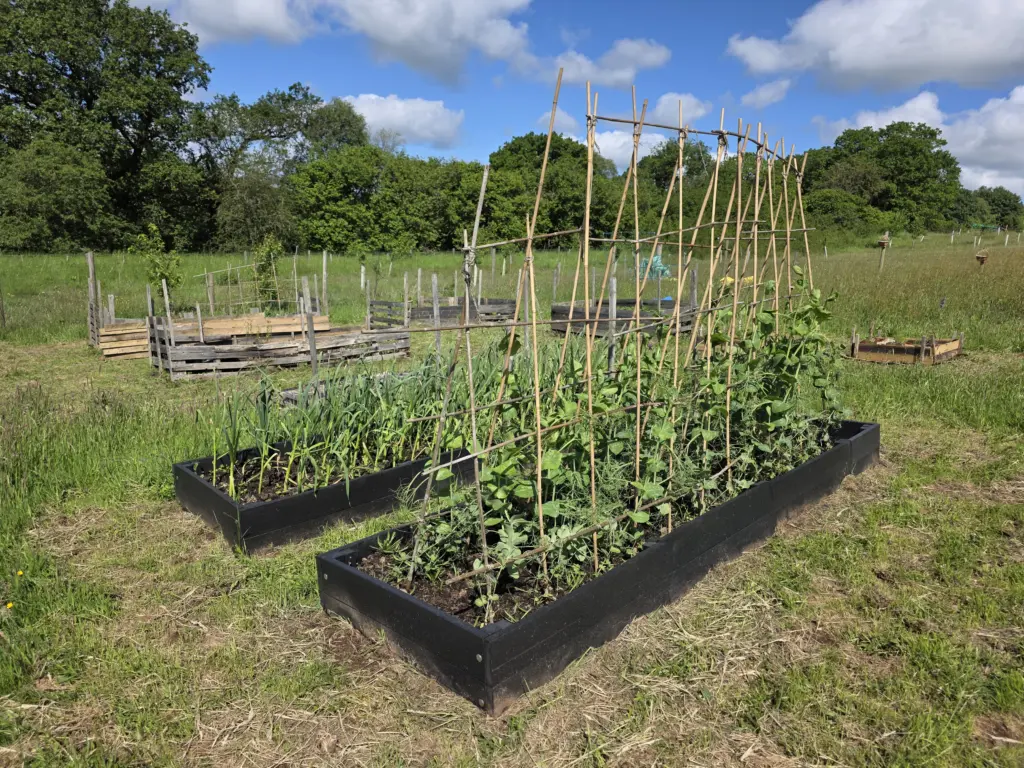
One year on at The Forest Ridge Project, our recycled plastic raised beds are still earning their place — proving stronger crops and a healthier soil with no maintenance required. In this update, guest blogger Sherel Moonfull shares how the no-dig allotment has grown: new beds, a bumper harvest of peas, potatoes, and garlic, and a six-year crop rotation that’s working exactly as planned. Discover how patience, the right materials, and a passion for sustainable growing came together to create real results.
Table of Contents
The Forest Ridge Project & No-Dig Growing: Key Questions Answered
- No-dig gardening is a method that builds soil health by layering compost and organic matter on top of the soil rather than turning or digging the earth, which protects soil structure and the organisms living within it.
- A six-year crop rotation is a growing method that moves different plant families between beds over a six-year cycle, which naturally restores soil nutrients, suppresses disease, and reduces the need for fertilisers or other external inputs.
- British Recycled Plastic raised beds have been independently laboratory-tested and confirmed safe for use around growing soil, with no harmful chemical leaching detected.
- British Recycled Plastic raised beds are made entirely from recycled waste plastic, require zero maintenance, and come with a 25-year guarantee. They will not rot, warp, or splinter.
- The Forest Ridge Project is an artist-led community growing space in the UK, founded in 2020 with a mission to strengthen relationships with nature through growing, foraging, and creative events.
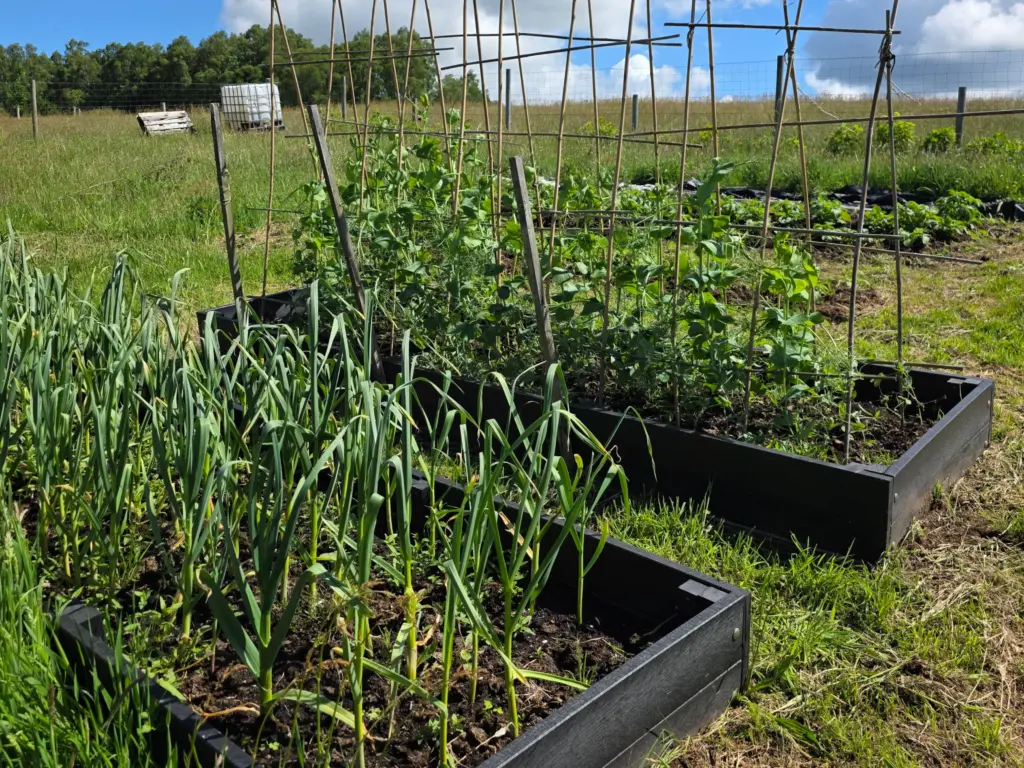
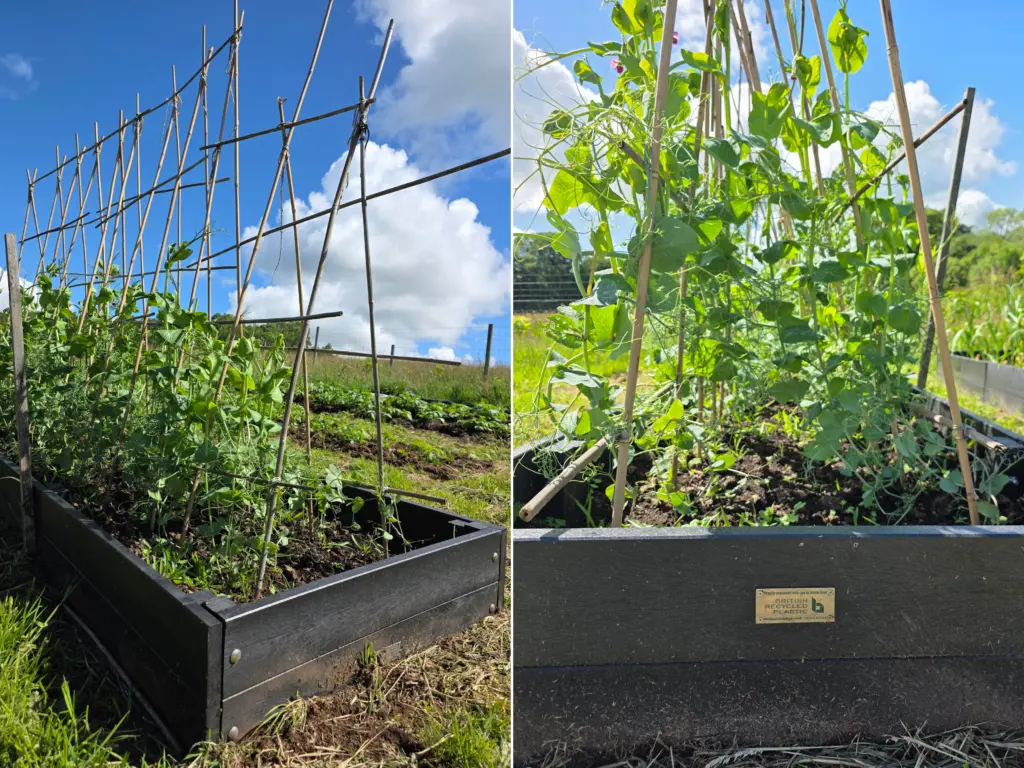
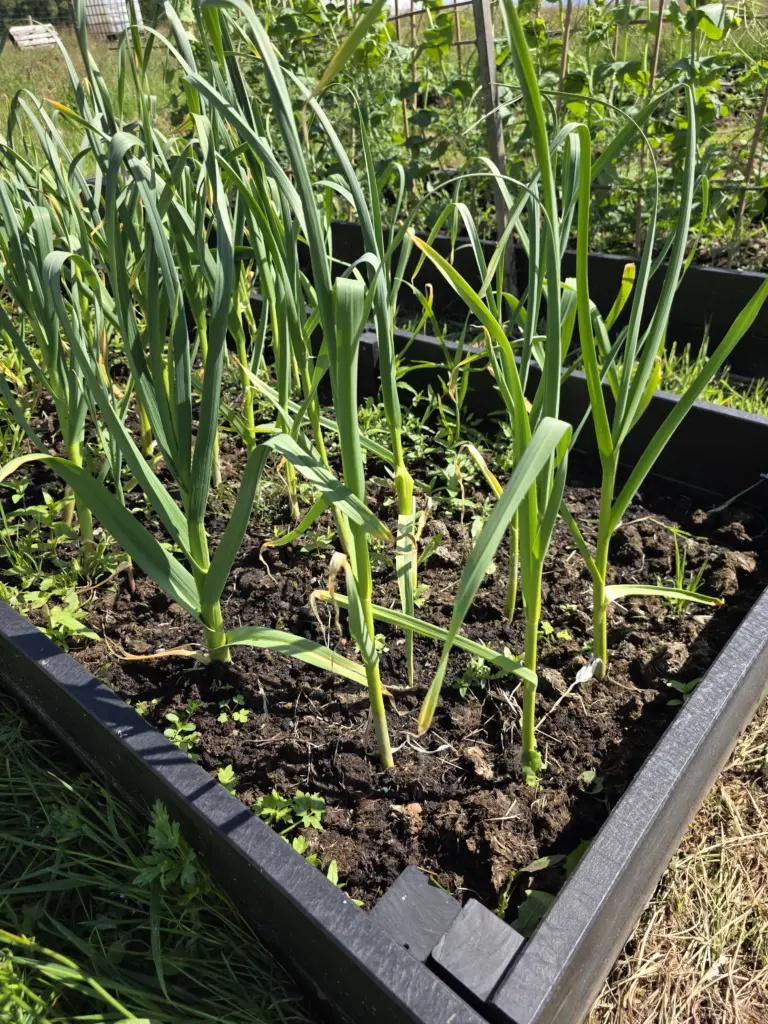
A lot can happen in a year. Twelve months after Sherel Moonfull first shared her story of no-dig growing and six-year crop rotation at The Forest Ridge Project, we went back to see how things had grown, and there’s plenty to show for it. New raised beds, freshly planted trees, and a bumper crop of peas, garlic and potatoes: so much is possible when you let the land set the pace.
Picking Up Where We Left Off
Last summer, guest blogger and forager Sherel Moonfull shared an inspiring reflection on the no-dig allotment and six-year crop rotation at The Forest Ridge Project. It’s a story about patience, soil, and working with the land rather than against it.
In case you’re new to the project… The Forest Ridge Project is an artist-led community with a growing space, started in 2020 as part of a mission to strengthen relationships with nature and learn more about what the natural world has to offer us – as well as what we can offer in return.
We were proud to donate two recycled plastic raised beds to support the project. In her first blog, Sherel shared how no-dig growing, a six-year crop rotation, foraging, and natural pest control came together to build healthier soil and a thriving, community-minded plot, and what she achieved laid the groundwork for the year that followed.
A year is a long time in a growing space. So we got back in touch with Sherel to find out how the project has developed since then, and we’re delighted to share what they’ve been up to.
Look What’s Possible
If there’s one thing The Forest Ridge Project shows, it’s how much a growing space can achieve when it’s tended with care, patience, and a passion for nature.
You don’t need acres of land to grow your own plants. Even a couple of raised beds and a simple crop rotation can transform a garden or allotment, improving your soil, reducing the need for inputs, and making growing easier and more rewarding over time.
We hope Sherel’s journey inspires others who are curious about low-impact growing and caring for the land. And remember: the best season to start growing is always the next one.
Start Your Own Growing Story
If The Forest Ridge Project has you dreaming about your own garden or allotment, we’d love to help. Our recycled plastic raised beds and planters are maintenance-free, built to last, and made entirely from recycled waste, so you can grow with a lighter footprint for years to come.
To talk through ideas for your space, or simply learn more about what’s possible, our friendly team are on hand five days a week at:
Phone: 01422 419 555
Email: [email protected]
Many thanks to Sherel Moonfull — Grower, Forager, and Mama — of Moonfull.co.uk, for sharing her photos and story with us.
Written by Molly Barrett.
Published August 2026
Recycled plastic works like wood in most scenarios, but how you work with the material differs and factors such as thermal expansion need to be considered. Its crucial that you follow our technical Guidance on our Lumber Page.
For example, we would never recommend stapling, nailing or welding plastic lumber. At British Recycled Plastic, we always suggest pre-drilling holes and using mechanical fixings.
All of British Recycled Plastic products are made to order so under normal circumstances please allow up to three weeks for delivery. On rare occasions at extremely busy times delivery may take a little longer, but we will let you know when you order if this looks likely.
Delivery to most of mainland Britain is included, however there is a small additional charge for the Highlands, Islands and Northern Ireland, depending upon your postcode. Please contact us for specific prices in you are in one of these areas.
Due to the very heavy weight of these and all of our other products, they are sent out strapped to pallets through the national road haulage network. Due to the kit form, even 3.5 metre long raised beds are stacked on individual pallets making them suitable for relatively small delivery vehicles that can in turn access narrow lanes.
No, they are only available direct from us. Please email your enquiries to [email protected] or call us on our freephone number of 01422 419 555 and let our expert team know what you’re interested in and where you are. We are available 5 days a week.
Do I need to buy a kit or can I make my own by just buying the lumber and fixing it together myself?
You can do either. If you have specific dimensions you wish to fill, you may prefer to buy full lengths and cut them to your exact requirements, saving a little money in the process. If you want something easy to assemble, pre-cut and with fixings supplied, a flat-packed kit is probably best for you.
Not at all.
One of the most common questions we’re asked is about leaching — especially when people are growing food. It’s a fair concern. If we care about soil health, we need confidence in the materials that surround it.
Independent laboratory testing under EU soil and groundwater regulations assessed the material for heavy metals, PAHs, PCBs and mineral oil hydrocarbons. The results were either extremely low or below detectable levels, all comfortably within strict environmental limits, including standards applied to soils used on children’s playgrounds
What this reinforces for us is that when flexible plastic waste is transformed into a dense, rigid, long-life structure, its environmental behaviour changes. It is no longer subject to constant abrasion or movement. Instead, it becomes stable infrastructure designed to remain in place for decades — keeping existing material safely in circulation rather than allowing it to fragment or be discarded elsewhere.
The recycled plastic acts as a thermal store, retaining heat and allowing for earlier germination.
Raised beds made from recycled plastic will last for many decades, maybe even 100 years, but ours come with a 25-year guarantee.
Recycled plastic lumber should always be stored laid flat on delivery, until you start work on it. It’s best to just leave everything on the pallet.
300mm is good general height for those people who are able to kneel while tending the bed; 600mm is the perfect height for wheelchair users and 750mm is a good height for those who would prefer to stand without bending too much.
500mm wide kits are perfect for those people who have only access to their raised beds from one side, for example if they are on the edge of a garden or against a wall, whereas 1 metre wide beds are ideal when access is possible from all around the raised bed.
There are a number of materials to choose from once you’ve decided that raised beds are for you. Wood is readily available and easy to work with but even when treated it rots quickly and is by far the least long lasting option. Sleepers are more durable but heavy and difficult to cut. They may also have been treated with preservatives in the past which will leak into your soil making it toxic. Bricks need a building expert on hand to ensure a safe construction and can also leak toxic lime into your soil. Concrete blocks will leave you needing either machinery or a strong team of helpers to put into place.
Recycled plastic raised beds are a permanent, maintenance-free option that come in an easy-to-construct kit. No heavy lifting, no plant hire and no team of body-builders required
They are made from a mix of High Density Polyethylene, Low Density Polyethylene, Polypropylene and Polythene. These plastics are derived from a wide variety of plastic products from hay bale wrapping, computer cases and car bumpers to vegetable crates and bottle tops but all belong to the polyolefin group of plastics.
Watch more about it here:
Absolutely! Raised beds, especially British Recycled Plastic raised beds, are a worthwhile investment for any gardener. Here’s why:
– Durability: Made from 100% recycled plastic, they’re weatherproof, rot-resistant, and built to last for decades with no maintenance.
– Improved Soil Control: You can create the perfect soil mix, free of weeds and contaminants, for healthier plants.
– Better Drainage: Prevents waterlogging, keeping roots healthy and promoting better growth.
– Eco-Friendly: Using recycled plastic reduces waste and supports sustainability.
– Accessible and Easy to Use: Taller beds are easier to plant and harvest, especially for those with mobility challenges.
– Cost-Effective: Their long lifespan and low upkeep make them a smart, long-term choice.
With British Recycled Plastic raised beds, you get a durable, sustainable, and hassle-free gardening solution, making them well worth it for any gardener.
Raised beds offer significant advantages for gardeners of all levels:
Better Soil Control:
You can create the perfect soil mix for your plants, ensuring ideal drainage, nutrient levels, and pH.
Improved Drainage:
Raised beds prevent waterlogging, keeping plant roots healthy and promoting robust growth.
Extended Growing Season:
The soil warms up faster in spring, allowing for earlier planting and a longer growing season.
Reduced Compaction:
Because you don’t step on the soil, it stays loose, encouraging better root development.
Easier Maintenance:
Managing weeds and pests is simpler in a raised bed. Plus, they require less bending, making gardening more comfortable.
Sustainable and Durable:
Raised beds made from British Recycled Plastic are weatherproof, rot-resistant, and built to last for decades, providing a sustainable gardening solution.
Raised beds are a versatile, efficient, and accessible way to garden, offering healthier plants and a more enjoyable gardening experience.
Raised beds, especially those made from British Recycled Plastic, offer numerous benefits over traditional gardening methods:
Improved Soil Quality:
Control the soil mix for optimal fertility, drainage, and weed-free planting.
Weatherproof and Durable:
British recycled plastic raised beds resist rot, rust, and weather damage, lasting for decades with no maintenance.
Eco-Friendly:
Made from 100% recycled materials, they reduce waste while promoting sustainable gardening.
Enhanced Drainage:
Raised beds prevent waterlogging, keeping roots healthy.
Accessible Gardening:
Taller beds make planting and harvesting easier, especially for those with limited mobility.
Pest and Weed Control:
Easier to manage weeds and protect plants from ground pests like slugs and rabbits.
Aesthetic and Customisable:
Available in various sizes, heights, and layouts to suit any garden design.
Choosing British Recycled Plastic raised beds means a sustainable, long-lasting solution that’s better for you, your plants, and the environment.
Raised beds offer several advantages over traditional in-ground gardening:
Improved Soil Quality:
You can control the soil composition, ensuring it’s nutrient-rich, well-draining, and free from weeds or contaminants.
Better Drainage:
Raised beds prevent waterlogging, which can be a problem in poorly draining in-ground gardens.
Earlier Planting:
The soil in raised beds warms up faster in spring, allowing for earlier planting and extended growing seasons.
Reduced Soil Compaction:
Since you don’t walk on the soil in raised beds, it stays loose, promoting healthier root growth.
Weed and Pest Management:
Raised beds make it easier to manage weeds and protect plants from pests like slugs or rabbits.
Accessibility:
Higher beds are easier to reach, making gardening more comfortable for people with mobility issues.
Durability and Sustainability:
British Recycled Plastic raised beds are weatherproof, rot-resistant, and eco-friendly, offering a long-lasting and low-maintenance gardening solution.
With their many benefits, raised beds provide a controlled, productive, and accessible way to grow vegetables, flowers, or herbs, making them a superior choice for most gardeners.
The best soil for raised beds is a mix that provides good drainage, fertility, and structure. Here’s a recommended blend:
Topsoil (50-60%):
Provides a solid base and structure for plants to grow.
Compost (30-40%):
Adds organic matter, nutrients, and improves soil health.
Aeration Material (10-20%):
Include materials like coarse sand or perlite to ensure proper drainage and prevent compaction.
Tips for Raised Bed Soil:
Depth: Ensure the soil is at least 12-18 inches deep to allow roots to grow freely.
Refresh Annually: Add a layer of compost each year to maintain fertility.
British Recycled Plastic raised beds retain soil structure and prevent erosion, ensuring consistent performance over time. British recycled plastic compost bins are a durable, eco-friendly, and low-maintenance solution that helps reduce waste, enrich garden soil, and support sustainable living, making them a smart choice for any environmentally conscious gardener
Constructed from 100% recycled plastic, British Recycled Plastic raised beds are maintenance-free, resistant to rot, and designed to last for decades. They come in various widths and lengths, with custom sizes available upon request to fit your specific garden layout. The kits are easy to assemble, requiring only basic tools, and include all necessary fixings.
British Recycled Plastic offers a versatile range of raised bed kits to suit various gardening needs. These kits are available in three heights—300mm, 600mm, and 750mm—catering to different preferences and accessibility requirements. The 300mm height is ideal for those comfortable kneeling, while the 600mm and 750mm options are perfect for sitting or standing work, making them suitable for individuals with limited mobility.
Constructed from 100% recycled plastic, British Recycled Plastic raised beds are maintenance-free, resistant to rot, and designed to last for decades. They come in various widths and lengths, with custom sizes available upon request to fit your specific garden layout. The kits are easy to assemble, requiring only basic tools, and include all necessary fixings.
By choosing British Recycled Plastic raised beds, you’re investing in a sustainable, durable, and user-friendly solution for your gardening projects.
Raised beds, especially British Recycled Plastic raised beds, offer better soil control, improved drainage, and warmer soil for earlier planting. They reduce weeds, pests, and soil compaction while being durable, weatherproof, and eco-friendly—perfect for a productive, low-maintenance garden.
Mulch raised beds in early spring to retain moisture and suppress weeds or in late fall to protect soil during winter. Reapply as needed throughout the growing season to maintain coverage. For a sustainable and durable solution, British Recycled Plastic raised beds are ideal. They’re weatherproof, maintenance-free, and eco-friendly, providing a long-lasting option for successful vegetable gardening.
The timing for planting in raised beds depends on the vegetables you’re growing and your local climate, but raised beds offer some flexibility:
– Early Spring Planting:
Raised beds warm up faster than ground soil, allowing you to start planting cool-season crops like lettuce, spinach, carrots, and peas earlier in spring.
– After the Last Frost:
For warm-season vegetables like tomatoes, cucumbers, and peppers, plant after the danger of frost has passed.
– Succession Planting:
Raised beds are ideal for succession planting. Once early crops are harvested, you can replant with summer or autumn vegetables, maximising your growing season.
– Year-Round Options:
With the right covers or cold frames, raised beds can be used for growing hardy crops like kale, broccoli, and winter onions even during colder months.
To make the most of your raised beds, plan your planting schedule based on the crops, weather, and growing conditions. Raised beds, especially British Recycled Plastic raised beds, offer a versatile and sustainable way to grow vegetables throughout the year.
Yes, raised beds are an excellent choice for growing vegetables. They offer several benefits that improve plant health and yield:
– Improved Soil Quality: You control the soil composition, ensuring it’s rich, well-draining, and free from contaminants.
– Better Drainage: Raised beds prevent water logging, which helps vegetable roots thrive.
– Warmer Soil: The soil warms up faster in spring, allowing for earlier planting and extended growing seasons.
– Reduced Soil Compaction: Since you don’t walk on the soil, it stays loose, promoting healthier root growth.
– Weed and Pest Control: Raised beds make it easier to manage weeds and protect plants from pests like slugs.
– Accessibility: They reduce the need for bending, making gardening easier for people with mobility issues.
For a sustainable and durable solution, British Recycled Plastic raised beds are ideal. They’re weatherproof, maintenance-free, and eco-friendly, providing a long-lasting option for successful vegetable gardening