Table of Contents
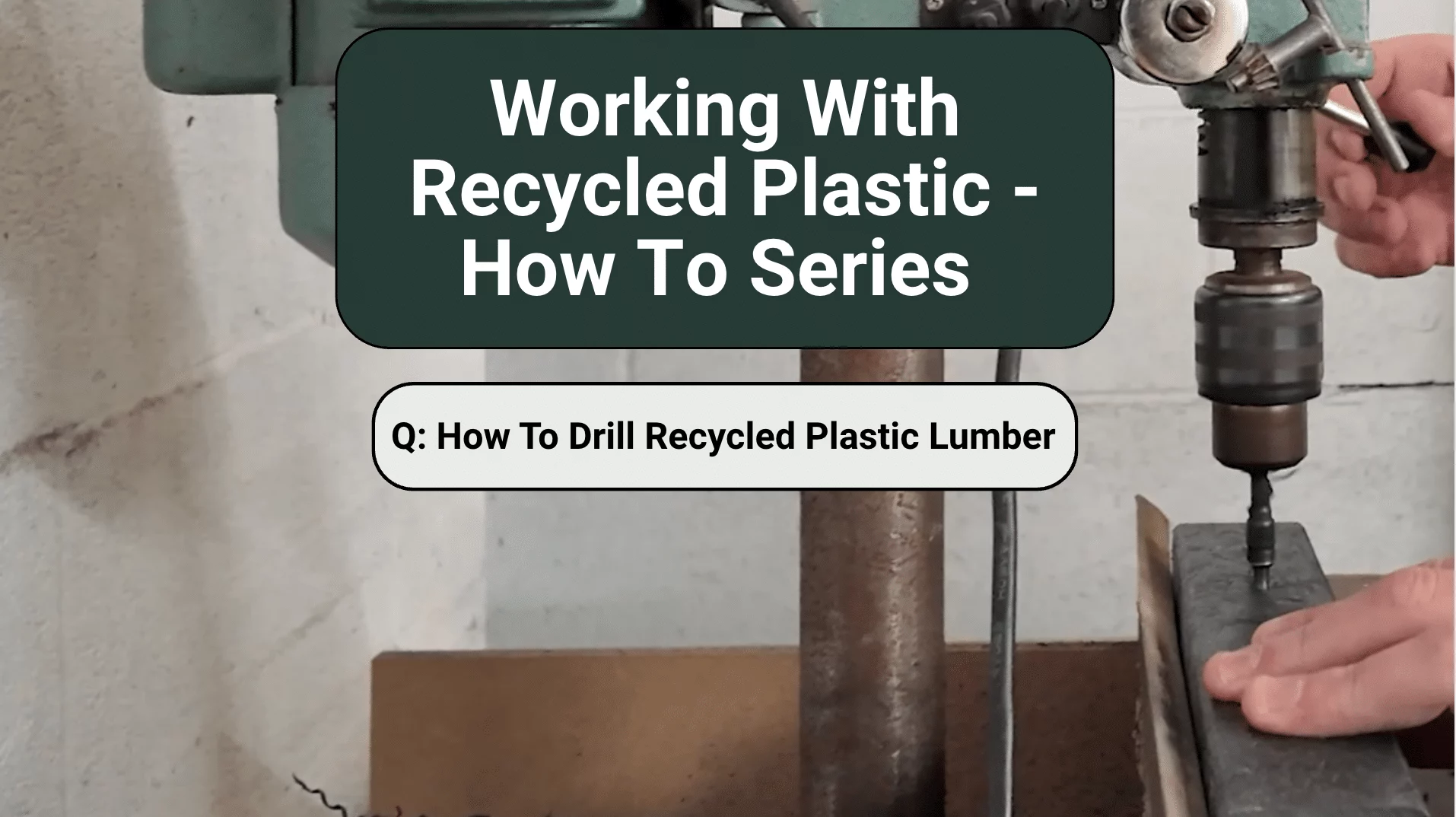
When you drill plastic lumber, there are a few things to consider: What other materials are you using, how to use different drill bits and whether you need pilot holes and expansion space around your screws. Below, we answer all these questions so you’re fully prepared before starting your project.
How To Drill Recycled Plastic Lumber
Do You Need Pilot Holes When You Drill Plastic Lumber?
Pilot holes are essential when drilling recycled plastic lumber. We advise against burying a screw directly into the plastic wood because stainless steel screws are relatively soft for the extremely dense plastic. Driving a screw straight in without a pilot hole could cause the screw to strip, snap or bind too tightly, making it difficult to remove later down the line. A simple pilot hole removes this risk, making installation far easier.
How To Properly Size A Pilot Hole
When you drill plastic lumber, the pilot hole should match the diameter of the screw shank – not the thread. This ensures the screw goes in smoothly without excessive force and provides a clean and consistent result every time.
Do You Need Expansion Space Around Screws In Plastic Wood?
Whether or not you need expansion space depends on the fixing material you’re using:
Fixing Recycled Plastic to Recycled Plastic
In this scenario, both pieces share the same thermal properties, which means they’ll expand and contract at the same time. So there’s no need to leave expansion space when you drill plastic lumber. For a secure fixing, just make sure the screw thread bites into both pieces of the plastic wood.
Fixing Recycled Plastic to Different Materials
When you drill recycled plastic lumber and fix it to other materials such as timber, concrete or steel, we do recommend creating a larger hole. This gives the screw a little wiggle room for when the materials expand and contract through different weather conditions without stressing the plastic. Again, the thread needs to grip both materials well to ensure a strong and secure fix.
You can learn more about expansion holes in our explainer video and view our installation guide.
If you need more advice on how to drill recycled plastic lumber and which materials to combine it with, speak to our friendly, knowledgeable team on 01422 419 555 or [email protected] and shop the full range here.
Written by the British Recycled Plastics team.
April 2026
British Recycled Plastic’s plastic lumber can be used in just about any project where wood and timber would be the go-to choice. The advantages of using plastic lumber are:
- There’s no risk of rotting, splintering, or warping
- It’s UV-resistant, staying looking fresh for longer
- No treatments, painting or preserving required
- Fully sustainable
- Wipes cleans
- Comes with a 25-year guarantee
Traditional timber comes with a long-term, repair and replace cycle, which recycled plastic lumber removes entirely. While the upfront cost is often a deterrent, it is more cost-effective over time.
Recycled plastic works like wood in most scenarios, but how you work with the material differs and factors such as thermal expansion need to be considered. Its crucial that you follow our technical Guidance on our Lumber Page.
For example, we would never recommend stapling, nailing or welding plastic lumber. At British Recycled Plastic, we always suggest pre-drilling holes and using mechanical fixings.
You don’t need to paint plastic lumber. Our recycled plastic lumber is available in a range of colours, reducing the need for painting or finishing. While it is technically possible to paint recycled plastic, the material has a non-porous surface, meaning paint does not adhere well and is likely to peel or flake over time.
British Recycled Plastic lumber is designed to retain its colour and appearance without painting, staining, or sealing. With built-in UV resistance and long-term durability, recycled plastic lumber maintains its look for years, making it a low-maintenance alternative to traditional timber.
Recycled plastic lumber is a long-lasting, low-maintenance alternative to traditional timber, manufactured from 100% recycled plastic materials. Designed for durability, it resists rot, moisture, insects, and weather damage, making it ideal for outdoor uses such as decking, fencing, garden furniture, and landscaping structures. Unlike wood, recycled plastic lumber does not require painting, staining, or ongoing treatment, reducing both maintenance costs and labour over time.
As a sustainable building material, British Recycled Plastic’s goal is to help divert waste from landfills and support a circular economy, transforming used plastics into high-performance construction products. It offers the natural appearance of wood while delivering superior longevity, making it a practical and environmentally responsible choice for residential, commercial, and public space projects.
The best fixings for plastic lumber, and the only fixings we recommend at British Recycled Plastic, are stainless steel bolts and screws. Whether that’s for boardwalks, platforms or anything else. Nails, staples and other fixings won’t bite into the material, correcting and will quickly need replacing.
We advise against burying a screwing plastic lumber directly because stainless steel screws are relatively soft for the extremely dense plastic. Driving a screw straight in without a pilot hole could cause the screw to strip, snap or bind too tightly, making it difficult to remove later down the line. A simple pilot hole removes this risk, making installation far easier.
How To Properly Size A Pilot Hole
When you drill plastic lumber, the pilot hole should match the diameter of the screw shank – not the thread. This ensures the screw goes in smoothly without excessive force and provides a clean and consistent result every time.
You can find out more detailed information on cutting, drilling and screwing plastic lumber in our British Recycled Plastic guide.
Yes, British Recycled Plastic can cut your material to your specified sizes for a small charge (see price list).