
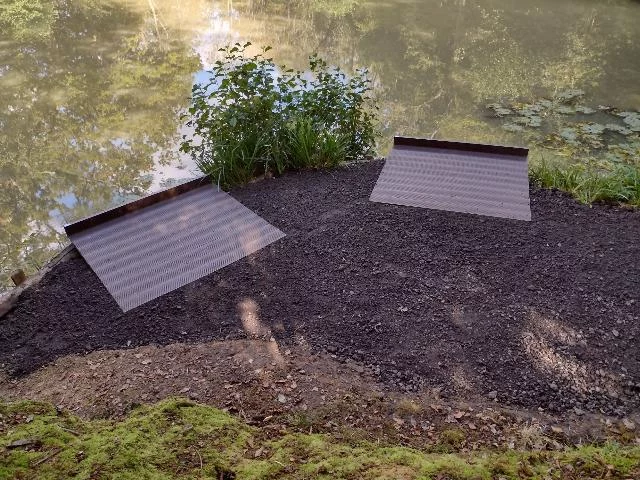
Learn how a recycled plastic, DIY fishing platform transformed the Crowborough and District Anglers Association’s lakeside access. Built using durable, low-maintenance recycled plastic lumber, these slip-resistant fishing pegs provide a safer, more stable, and sustainable solution for anglers while improving comfort and long-term performance in all weather conditions.
- Crowborough installed a new recycled plastic DIY fishing platform
- The upgrade replaced muddy, unstable banksides
- Recycled plastic lumber provides slip-resistant, durable surfaces
- The DIY fishing platforms are weatherproof, rot-resistant, and low-maintenance
- Improved safety, comfort, and accessibility for anglers
- Sustainable materials help reduce plastic waste and support long-term use
For fishing enthusiasts at Crowborough and District Anglers Association, creating a safe, stable place to enjoy fishing was a top priority. Over time, the natural banks became muddy and unstable, making it challenging for members to enjoy their time by the water. To address this, the association recently crafted DIY fishing platforms made from durable, recycled plastic.
Transforming the Fishing Experience With Recycled Plastic Fishing Pegs
Dave Flint and his team at Crowborough knew that the sloping, muddy banks needed an upgrade. After careful planning and waiting for a break in the weather, they finally began the installation at the beginning of the month. The result? A DIY fishing platform created with sturdy, slip-resistant recycled plastic lumber, which has significantly improved accessibility and comfort for all members.
Dave shares,
“The feedback we are getting suggests our members love them, and having used them myself, it’s nice not to be sat on the sloping, muddy bankside that they have replaced. Thank you for all your help, and if we decide to build any more, I will be in touch again.”
Step-by-Step Transformation of the Bankside
The installation of the DIY fishing platforms at Crowborough followed a natural progression, with each stage carefully planned to ensure stability and durability. Here’s a look at how the transformation unfolded:
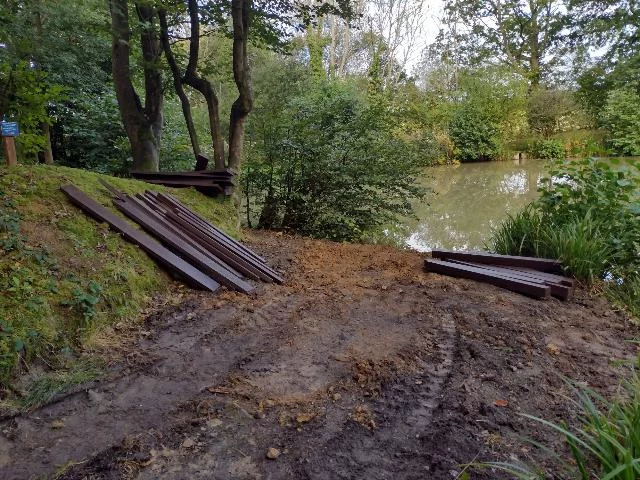
1. Preparation of the Area
The team started by clearing and levelling the bankside, preparing the ground for the new DIY fishing platforms. This step ensured a solid foundation and removed any loose soil that could cause instability.
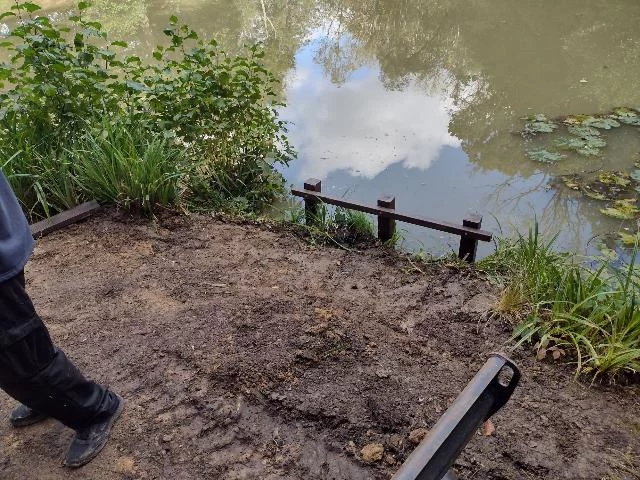
2. Bringing in Recycled Plastic Artificial Lumber
Stacks of recycled plastic lumber were then brought to the site, ready to be assembled into the platforms. These high-quality, eco-friendly planks offered a robust alternative to traditional wood, ensuring that the platforms would be both weather-resistant and low-maintenance.
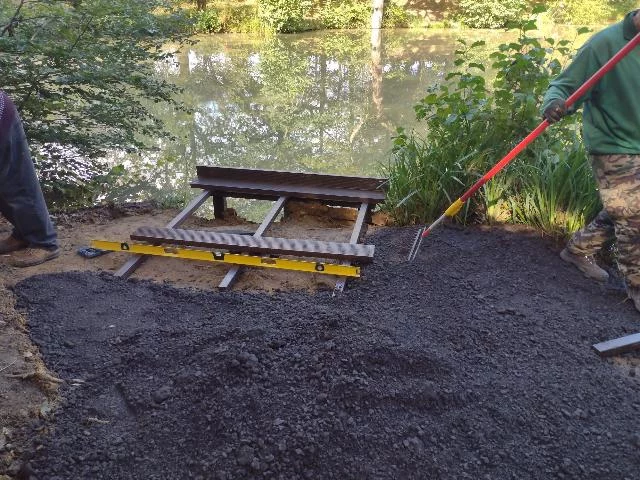
3. Laying the Foundation
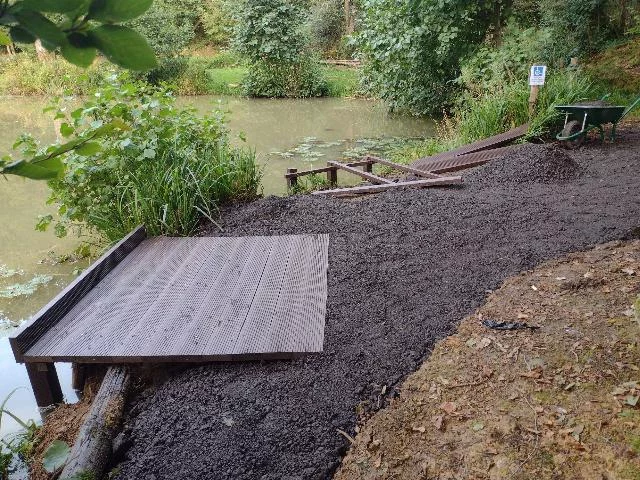
The foundation of the DIY fishing platforms was assembled on-site, with each piece of recycled plastic lumber securely fitted into place. The platforms were built to handle the weight and movement of anglers, ensuring they would remain stable over time.
4. Final Touches and Levelling
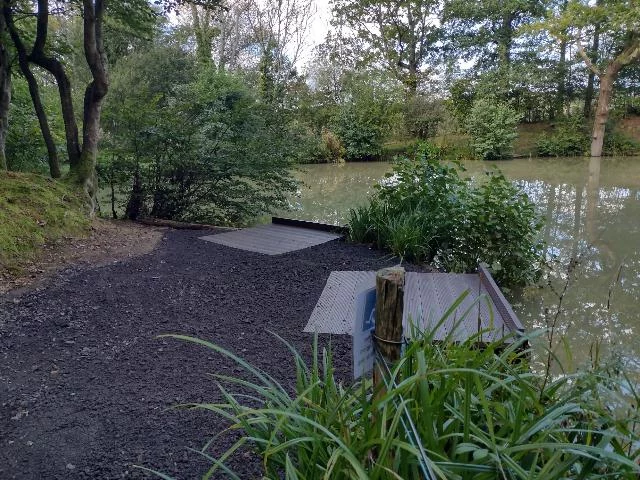
With the main structure complete, the team added a layer of gravel around the artificial wood platforms to improve traction and provide a clean, even surface leading up to the fishing spots. This attention to detail helped prevent erosion and reduce the risk of slips.
The Benefits of Recycled Plastic for DIY Fishing Platforms
Opting for recycled-plastic artificial lumber for these DIY fishing platforms brought multiple benefits. British Recycled Plastic artificial wood is resistant to rot, water damage, and pests—ideal for a structure exposed to the elements. Additionally, this choice aligned with the association’s commitment to sustainability, as each platform repurposes plastic waste, giving it a second life in an eco-friendly form.
Feedback from the Community
The new artificial wood platforms have already made a positive impact. Members appreciate the stability and comfort, and they no longer have to contend with muddy, uneven ground. For fishing enthusiasts like Dave and his team, the installation has been a game-changer, enhancing the overall experience and allowing everyone to focus on what they love most: fishing.
Written by the British Recycled Plastic team.
Updated May 2026
- All
- Accessible Furniture FAQ's
- BBC News Article FAQ's
- Bollard FAQ's
- British Recycled Plastic FAQ's
- British Recycled Plastic Ground Reinforcement Grids FAQ's
- British Recycled Plastic In Education FAQ's
- British Recycled Plastic Payments & Delivery FAQ's
- British Recycled Plastic Raised Beds FAQ's
- British Recycled Plastic Tables FAQs
- British Recycled Plastics Benches and Seats FAQ's
- Compost FAQ's
- Decking & Boardwalks FAQ's
- Decking FAQs for Blog
- Driveway grids
- FAQs For Heritage Sites
- Fencing Blog FAQ's
- Fencing FAQ's
- Garden Furniture FAQ's
- General FAQ's
- Litter Bin FAQ's
- Microplastics
- Our Office & General FAQs
- Parklets FAQ's
- Planters FAQ's
- Product Specific Questions
- Sign Post FAQ's
- Sustainability FAQ's
No. Recycled plastic decking requires virtually zero maintenance. It does not need staining, sealing or treatment — an occasional clean is purely cosmetic
Yes. British Recycled Plastic products are manufactured in the UK using recycled UK plastic waste, supporting circular economy and sustainable procurement goals.
Stainless steel decking screws are recommended to ensure fixings remain durable over the lifetime of the structure.
Once worn in, recycled plastic decking is often less slippery than treated timber in wet conditions. Correct installation and drainage design are important.
Yes. Councils and contractors use recycled plastic decking in parks, housing estates, boardwalks and other public realm environments because it is weatherproof, splinter-free and long-lasting.
Like most outdoor materials, recycled plastic lumber expands slightly with temperature. Correct installation spacing and joist support (typically 450–500mm centres) ensures long-term stability.
Yes. Recycled plastic decking is a practical timber alternative, especially in wet environments where wood can rot or become slippery over time.
Yes. Choosing recycled plastic panels helps divert waste from landfill and supports sustainable procurement and circular economy goals. British Recycled Plastic only used British waste and provides councils and contractors with comprehensive ESG/ sustainability data.
Recycled plastic fencing performs well in high-traffic public environments where durability and resistance to damage are important. Graffiti can simply be wiped off the recycled plastic and it is incredibly durable. British Recycled Plastic fencing comes with a 25 year guarantee.
No. These panels do not need staining, painting or sealing, unlike timber fencing.