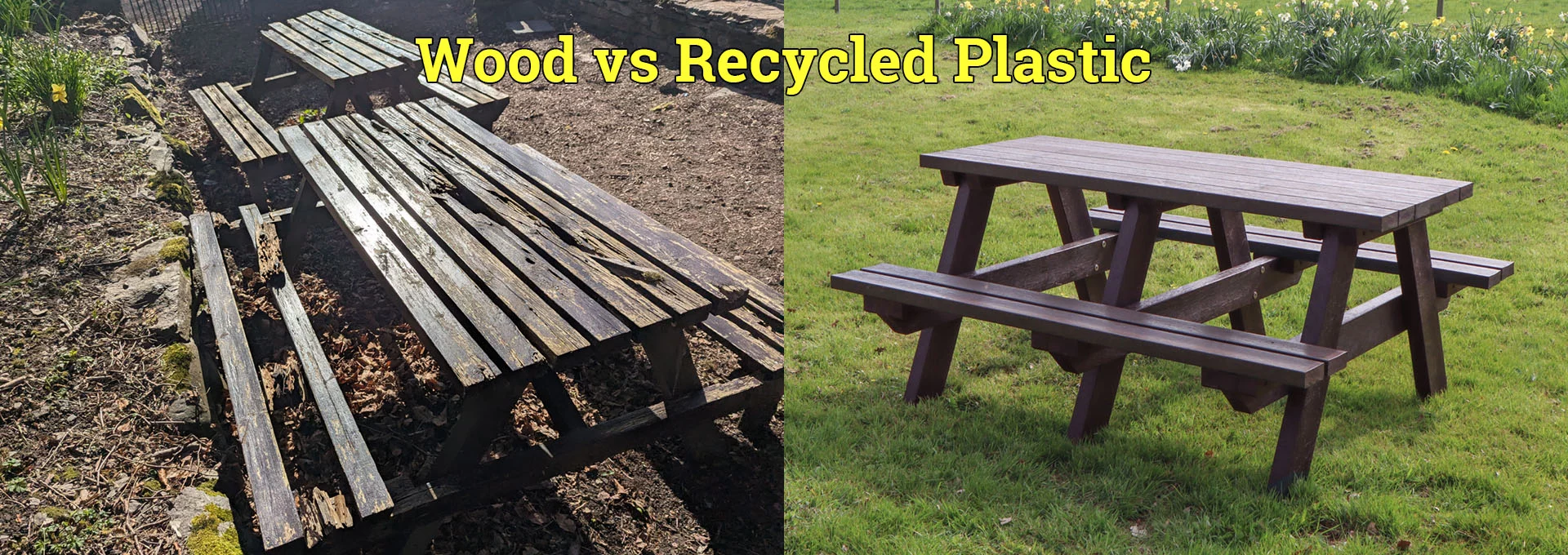
Wood vs recycled plastic is a hot topic at the moment. Recycled plastic is a durable, low-maintenance alternative to traditional timber for outdoor spaces. Unlike wood, recycled plastic products won’t rot, splinter, or require regular treatment, making them ideal for schools, parks, hospitality venues, sports clubs, and public estates. With long-term cost savings and strong environmental benefits, recycled plastic outdoor furniture and landscaping products offer a smarter, more sustainable investment.
- Recycled plastic outperforms timber in durability and lifespan.
- Won’t rot, splinter, crack, or suffer insect damage.
- Requires virtually no maintenance compared to wood.
- Delivers long-term cost savings through reduced repairs and replacements.
- Safer for public spaces due to smooth, splinter-free surfaces.
- Made from 100% recycled materials, supporting sustainability goals.
- Ideal for schools, pubs, hotels, parks, sports clubs, and estates.
- For wood vs recycled plastic, plastic provides a long-lasting, weatherproof outdoor solution.
If you manage outdoor spaces—be it a school, hotel, pub, sports club, or public estate—you understand the challenges of maintaining timber structures. Traditional wood vs recycled plastic, while classic in appearance, is prone to rot, splintering, and insect damage and requires regular upkeep. Recycled plastic offers a compelling alternative, delivering long-term value, durability, and sustainability.
Why Recycled Plastic Outperforms Timber in Outdoor Applications
1. Wood vs Recycled Plastic – Durability
Recycled plastic products are engineered to withstand the elements. Unlike timber, they do not absorb moisture, rot, splinter, or succumb to insect infestations. Our materials are specifically designed for longevity, resisting weathering and maintaining structural integrity over time. Winner – Recycled Plastic
2. Wood vs Recycled Plastic – Maintenance
Timber structures often require annual treatments—painting, staining, or sealing—to prevent decay. Recycled plastic, however, is virtually maintenance-free. A simple wash with soap and water keeps it looking new, eliminating the need for ongoing labour and material costs. Winner – Recycled Plastic
3. Wood vs Recycled Plastic – Cost-Effectiveness
While the initial investment in recycled plastic may be higher than timber, the long-term savings are significant. A study by WRAP indicates that recycled plastic products can result in up to 80% savings over their lifespan compared to wood, due to reduced maintenance and replacement needs. Winner – Recycled Plastic
4. Wood vs Recycled Plastic – Safety and Comfort
Unlike timber, recycled plastic surfaces remain smooth and splinter-free, enhancing safety—especially important in environments frequented by children or the public. Additionally, these materials are resistant to graffiti and can be easily cleaned, maintaining a pristine appearance with minimal effort. Winner – Recycled Plastic
5. Wood vs Recycled Plastic – Environmental Sustainability
Utilising recycled plastic helps divert waste from landfills and reduces the demand for virgin timber, contributing to forest conservation. Our products are made from 100% recycled materials, aligning with eco-friendly initiatives and sustainability goals. Winner – Recycled Plastic
Applications Across Various Sectors
Wood vs Recycled Plastic in Education
Schools benefit from durable, low-maintenance outdoor furniture and play equipment. Recycled plastic benches and picnic tables provide safe, long-lasting solutions for playgrounds and outdoor learning spaces.
Hospitality
Hotels and pubs require outdoor furnishings that withstand heavy use and varying weather conditions. Recycled plastic furniture maintains its appearance without constant upkeep, enhancing guest experiences and reducing operational costs.
Sports and Leisure
Sports clubs and recreational facilities benefit from the robustness of recycled plastic in seating, decking, and fencing. Its resistance to moisture and wear ensures longevity, even in high-traffic areas.
Public Estates and Parks
For estate managers, the longevity and minimal maintenance of recycled plastic make it ideal for public benches, boardwalks, and fencing. Its durability ensures that public spaces remain safe and attractive with reduced maintenance budgets.
Transitioning from timber to recycled plastic for outdoor applications offers numerous benefits: enhanced durability, reduced maintenance, cost savings, safety, and environmental sustainability. By investing in recycled plastic products, you ensure long-term value and contribute to a more sustainable future.
Explore the range of recycled plastic solutions that win the battle of wood vs recycled plastic every time. If you need help creating the perfect fit for your outdoor space, our friendly team is on hand 5 days a week: info@britishrecycledplastic.co.uk or 01422 419 555.
Written by the British Recycled Plastic team.
Updated May 2026
British Recycled Plastic’s plastic lumber can be used in just about any project where wood and timber would be the go-to choice. The advantages of using plastic lumber are:
- There’s no risk of rotting, splintering, or warping
- It’s UV-resistant, staying looking fresh for longer
- No treatments, painting or preserving required
- Fully sustainable
- Wipes cleans
- Comes with a 25-year guarantee
Traditional timber comes with a long-term, repair and replace cycle, which recycled plastic lumber removes entirely. While the upfront cost is often a deterrent, it is more cost-effective over time.
Recycled plastic works like wood in most scenarios, but how you work with the material differs and factors such as thermal expansion need to be considered. Its crucial that you follow our technical Guidance on our Lumber Page.
For example, we would never recommend stapling, nailing or welding plastic lumber. At British Recycled Plastic, we always suggest pre-drilling holes and using mechanical fixings.
Recycled plastic lumber is a long-lasting, low-maintenance alternative to traditional timber, manufactured from 100% recycled plastic materials. Designed for durability, it resists rot, moisture, insects, and weather damage, making it ideal for outdoor uses such as decking, fencing, garden furniture, and landscaping structures. Unlike wood, recycled plastic lumber does not require painting, staining, or ongoing treatment, reducing both maintenance costs and labour over time.
As a sustainable building material, British Recycled Plastic’s goal is to help divert waste from landfills and support a circular economy, transforming used plastics into high-performance construction products. It offers the natural appearance of wood while delivering superior longevity, making it a practical and environmentally responsible choice for residential, commercial, and public space projects.
Yes, British Recycled Plastic can cut your material to your specified sizes for a small charge (see price list).
Recycled Plastic and Composite materials typically combine different elements, like wood fibres and plastics, for enhanced strength and durability. However, due to their composition, composites can’t be easily recycled. On the other hand, recycled plastic, like that from British Recycled Plastic, originates solely from reused plastic, making it fully recyclable and a more sustainable choice. It lasts longer, offers eco-friendly benefits, and can be continually recycled, minimizing environmental impact. Choose British Recycled Plastic for durable, sustainable solutions that make a lasting difference.
British Recycled Plastic is made from 100% uk plastic waste.
Our recycled plastic is made with a wide variety of plastic waste products from industrial, commercial, agricultural and domestic sources. These materials are shredded, melted and mixed together to create our incredibly strong plastic lumber.
The most common plastic types used are High Density Polyethylene, Low Density Polyethylene, Polypropylene and Polythene. These are all members of the Polyolefin family, so mix well together at the same temperature.
These materials form 99% of the content. They are mixed with 1% masterbatch, for colour control, which is also made from entirely recycled material.
Recycled plastic lumber is a sustainable alternative to timber is is typically just as strong, if not stronger than wood. It is widely used in applications where timber would traditionally be used however, due to its dense, non-porous composition, it is longer-lasting and low maintenance. Unlike wood, British Recycled Plastic lumber won’t rot, splinter, split or warp.
British Recycled Plastic provide a range of accessibility-focused outdoor furniture, including wheelchair-accessible picnic tables, benches designed for reduced mobility, and easy-access walkways. Our products are crafted to ensure inclusivity and comfort for all users. Made from 100% recycled materials, British Recycled Plastic furniture is weatherproof, maintenance-free, and built to last for decades. To find out more about our range, give us a call at 01422 419 555—we’re happy to help!
93% of the grid is an open structure, meaning that the vast majority of rain that falls on them heads straight back to the water table, rather than being forced into an overburdened drainage system, as would be the case with tarmac.
Any method of “slowing the flow” of rain water reduces the risk and subsequent impact of flooding.