
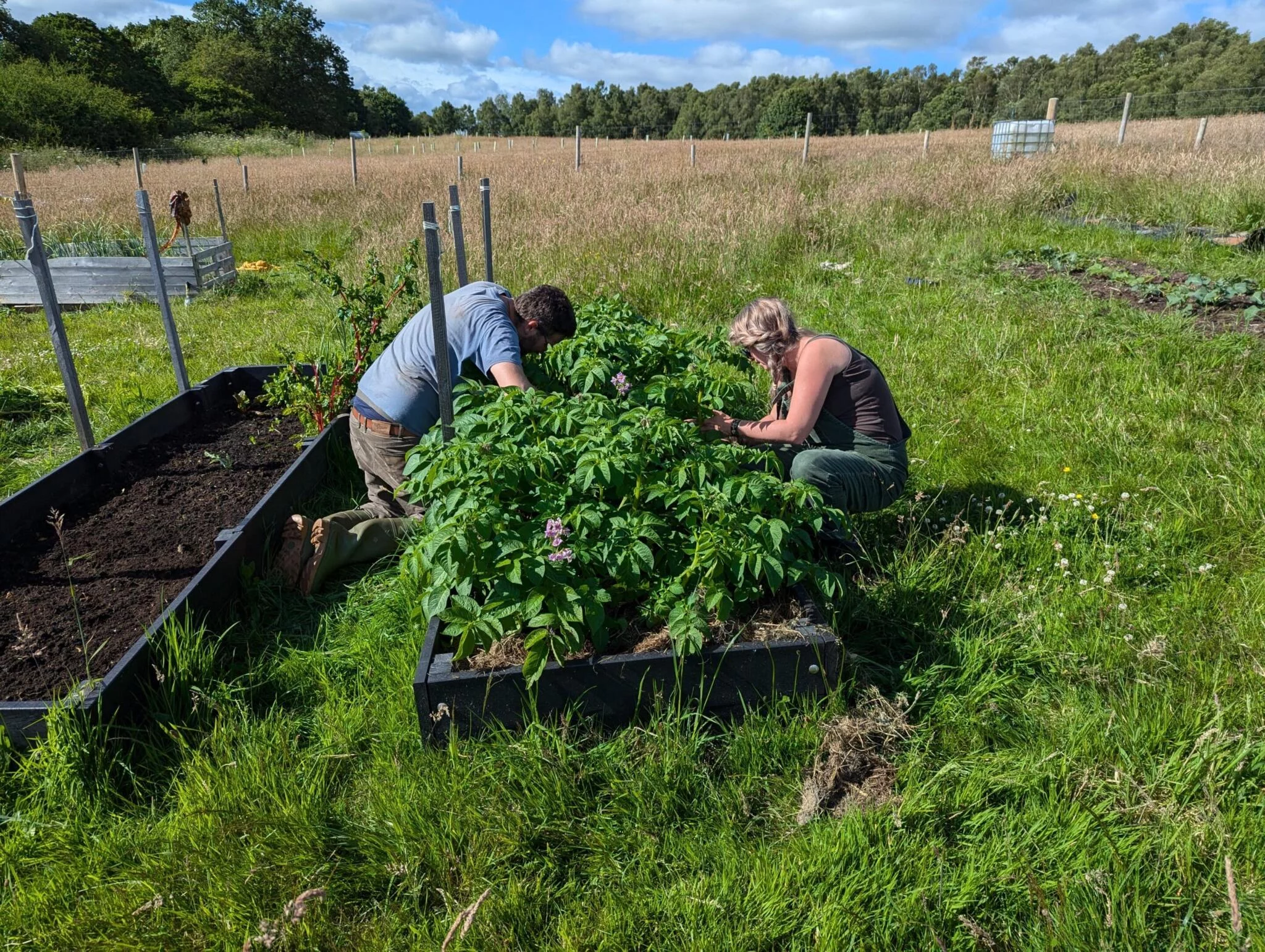
Guest blogger Sherel Moonfull shares her experience of no-dig growing, six-year crop rotation, foraging, and sustainable gardening at The Forest Ridge Project. Discover how recycled plastic raised beds, natural growing methods, and seasonal awareness can help create healthier soil, stronger crops, and more resilient community growing spaces.
Table of Contents
- Sherel Moonfull shares insights from her no-dig allotment at The Forest Ridge Project, a six-year crop rotation system helping improve soil health, reduce pests, and increase resilience.
- Recycled plastic raised beds provide durability, warmth retention, accessibility, and low maintenance.
- No-dig gardening supports soil ecosystems and natural growing rhythms.
- Natural pest control methods include garlic spray, neem oil, and hot pepper spray.
- Many common “weeds” such as nettles, chickweed, dandelion, and sorrel can be foraged and eaten.
- Future plans include composting, tree planting, greenhouse improvements, and more recycled plastic raised beds.
Guest Blog by Sherel Moonfull
We’re thrilled to welcome Sherel Moonfull—grower, forager, and founder of Moonfull—as our guest blogger. Writing from her allotment at The Forest Ridge Project, Sherel shares thoughtful reflections on no-dig growing, six-year crop rotation, and the deep lessons the land offers through the seasons.
Growing Gently with No-Dig
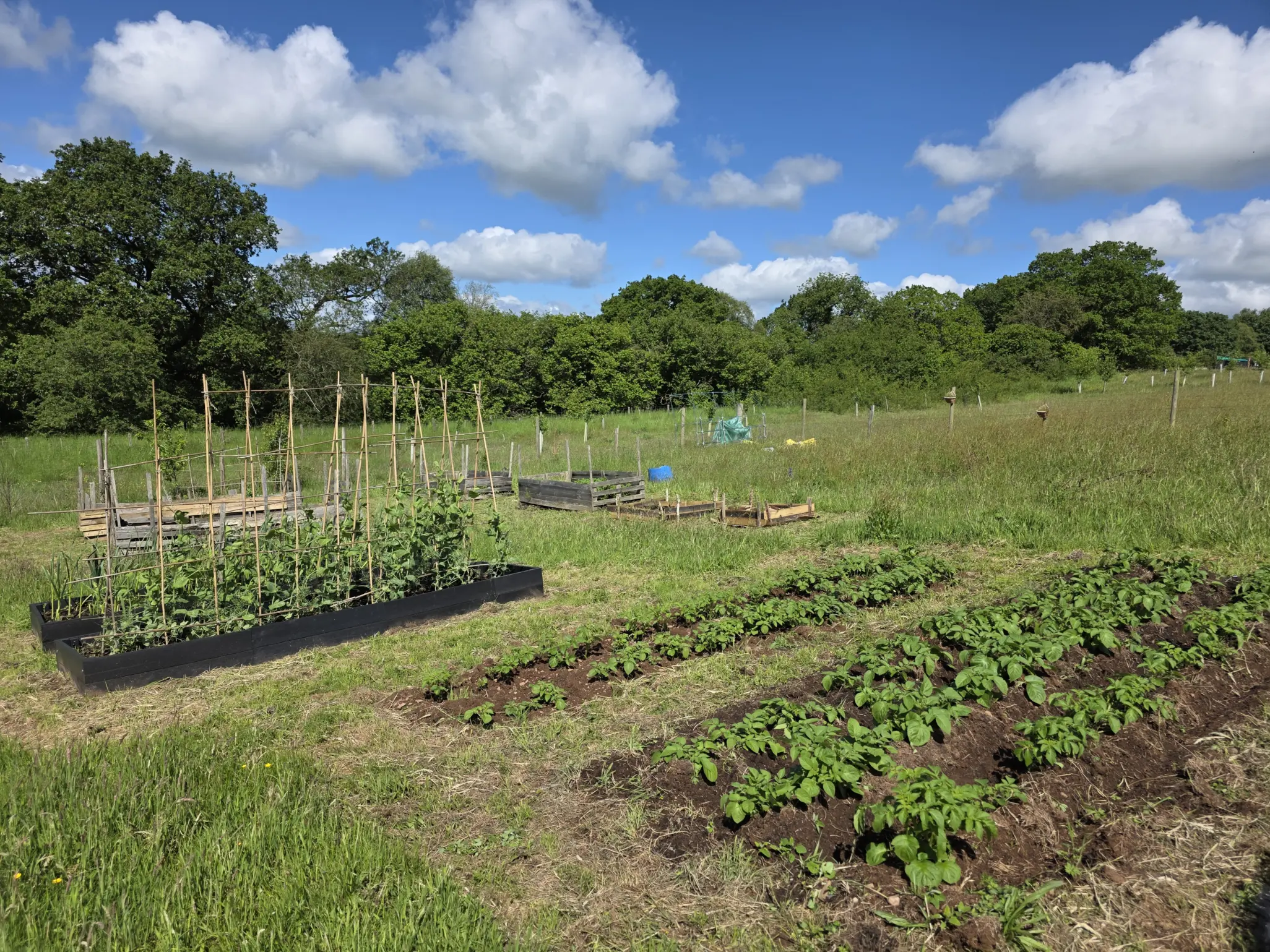
Here in the allotment at The Forest Ridge Project, we’re slowly embracing the no-dig approach, a gentle, regenerative method of growing that protects the delicate structure of the soil while supporting thriving ecosystems just below the surface.
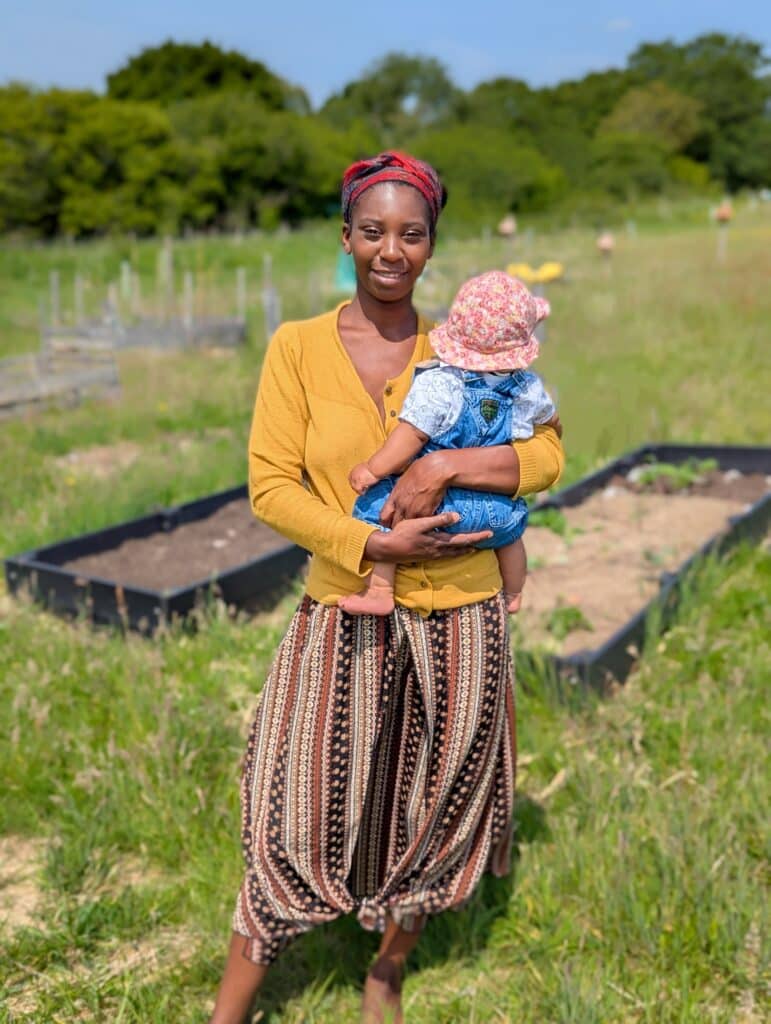
“It’s a system that honours the natural rhythms of the land, where every season brings a new lesson. This Spring, my first as a Mother, has felt particularly meaningful. There’s something deeply affirming about seeing new life all around you while nurturing a small and new life of your own. The patience, the presence, the noticing, it all feels connected.”
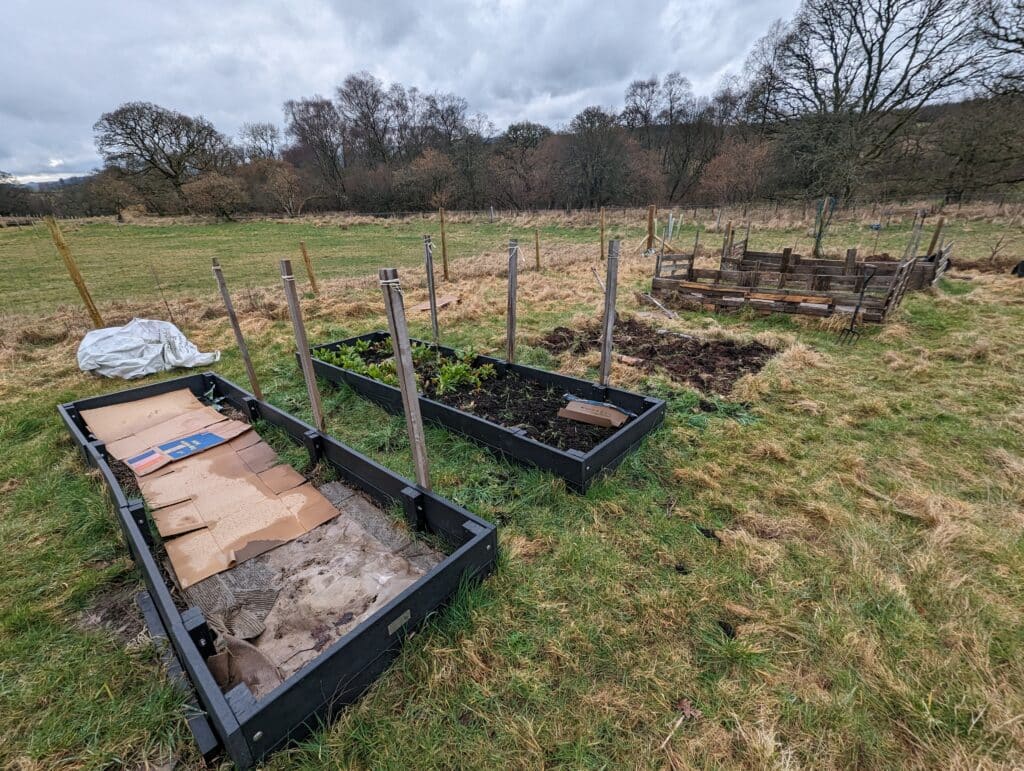
Why a Six-Year Crop Rotation?
We’ve now committed to a six-year crop rotation cycle, moving away from the more commonly used four-year plan. The longer cycle gives each crop group more space and time to thrive while giving the soil a better chance to rest and rebuild.
Our Six-Year Crop Rotation Looks Like This:
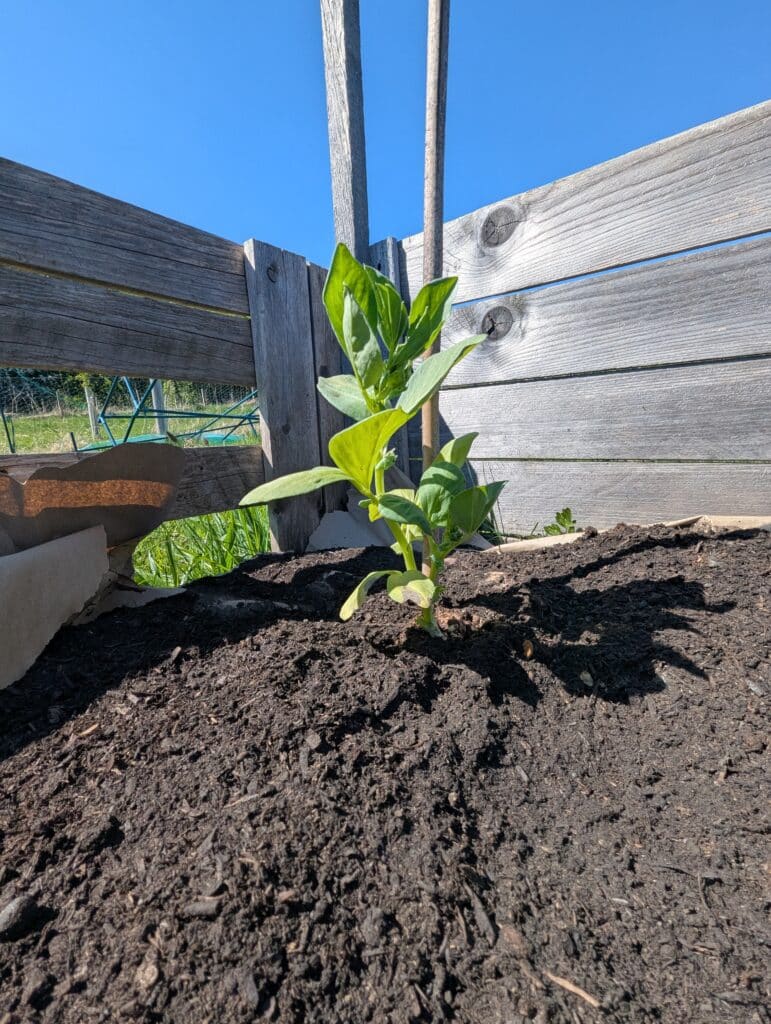
- Year 1 – Legumes: Beans and peas fix nitrogen into the soil, improving fertility for the crops that follow.
- Year 2 – Brassicas: Cabbage, kale, broccoli and other brassicas benefit from that nitrogen-rich environment.
- Year 3 – Potatoes: Heavy feeders like potatoes follow, taking full advantage of the improved soil conditions.
- Year 4 – Roots: Carrots, beetroot, parsnips, and other root veg prefer well-structured, lighter soil.
- Year 5 – Cucurbits: Pumpkins, courgettes and squashes are nutrient-hungry and do well following roots.
- Year 6 – Alliums: Onions, garlic and leeks, with lower nutrient demands, complete the cycle and help suppress disease before it begins again.
A six-year crop rotation cycle means fewer pest build-ups, improved nutrient management, and healthier crops overall. It’s about working smarter, not harder. And because each plant family brings different gifts and needs, the land stays more balanced and resilient.
If you’ve never tried crop rotation, now is the perfect time to start. Even if you have just a few growing spaces or raised beds, you can plan a simple rotation on a small scale. It keeps your soil healthier, reduces the need for inputs, and, ultimately, makes growing easier over time.
Record Keeping and Labelling
This year, we’ve taken another step forward by starting garden record-keeping. Each raised bed is now clearly labelled, and we’re logging what’s been planted, how it’s performing, and when it’s due to rotate.
“It’s about deepening our relationship and respect for the land. Observing patterns, spotting problems early, and celebrating progress. For me, it becomes much easier when it’s written down. And as the seasons turn, we’ll be able to look back, reflect, and adapt more confidently.”
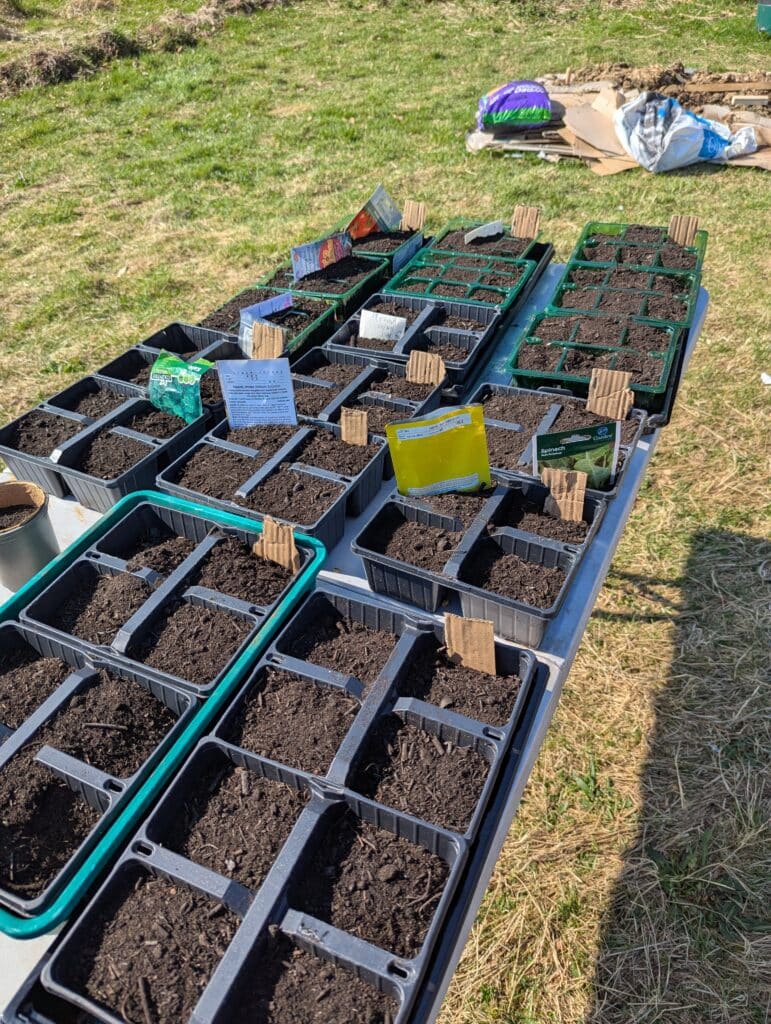
Raised Beds: Why They Work So Well
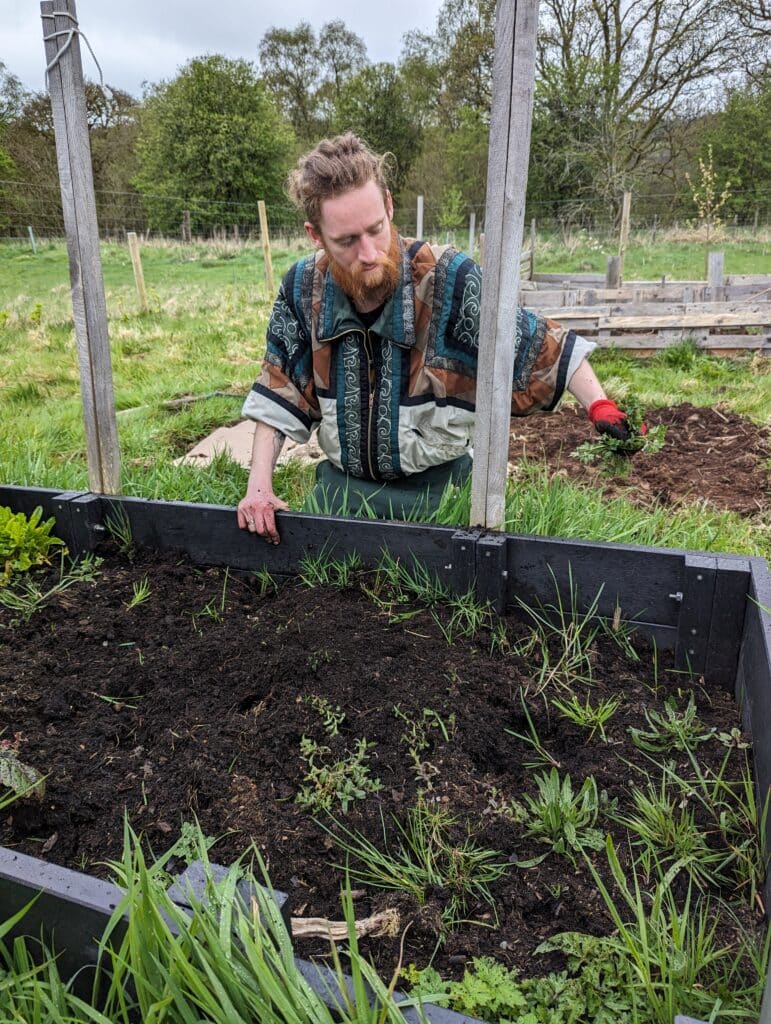
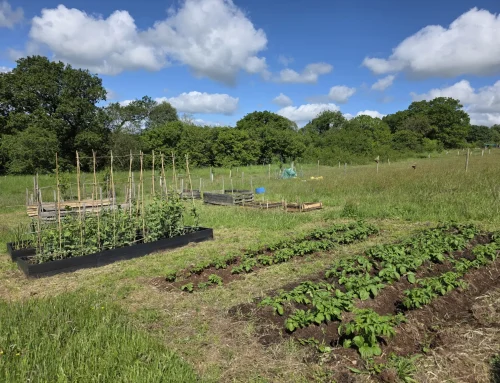
Thanks to British Recycled Plastic, we now have two recycled plastic raised beds in the allotment. These have completely transformed our growing setup, making our six-year crop rotation even more successful.
Compared to traditional wooden beds, which are prone to rot and often attract slugs, these plastic raised bed kits are incredibly sturdy. The raised beds retain heat, which gives early crops a strong start, and their structure gives you something to lean against while you work, especially helpful during longer planting sessions, for those with mobility needs or… like me, with a baby on their back, front or hip!
The raised beds also create clearer boundaries. They help keep pathways tidy, make watering more efficient, and give you greater control over soil quality.
I’ve tried it all over the years: ground-level planting, wooden frames, and now these. Without a doubt, plastic raised beds win for longevity, structure, and productivity. Wild food is defined as any edible plant that grows spontaneously in self-sustaining populations outside cultivated areas, without human intervention and is safe for human consumption. Wild food can be sustainably harvested from hedgerows, woodlands and the countryside, but also in surprisingly urban places too, such as towpaths and local parks.
The majority of food found in the wild is nutritionally superior and has a lower carbon footprint than its supermarket counterpart. This free and organic wild food is as natural as it gets, packed with raw flavour and without irritating packaging. Some of the food I forage is seen by others as a troublesome weed, like dandelion and nettle; others are invasive. Invasive plants are harmful to certain environments because they overcrowd our native species and reduce biodiversity. Removing and eating these species brings the ecological balance back and is a really sustainable way to increase nutrients in your diet.
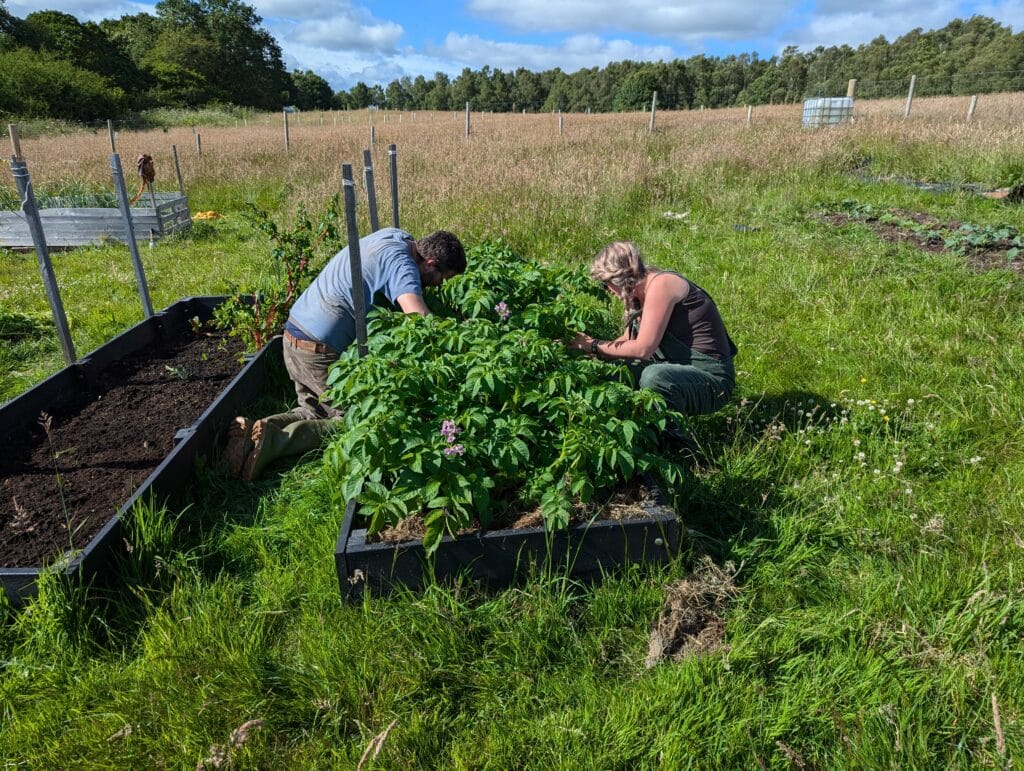
The Rhythm of the Seasons: Spring into Summer
This Spring has been full of surprises, hot days which will be followed by sudden rainfall, a reminder that Mother Nature rarely follows a predictable script.
To stay ahead of the shifts, we’re:
- Mulching beds heavily to retain moisture in the heat and suppress weeds during rainier spells
- Watering in the early morning, allowing plants to hydrate before the midday sun hits
- Harvesting more often, as warmth speeds up growth and bolting in leafy greens
- Ventilating the greenhouse on hot days to reduce humidity and prevent disease
“Flexibility is key in a growing season like this. I’m trusting my senses and observing the plants closely. They’ll tell us what they need.”
Natural Plant Protection
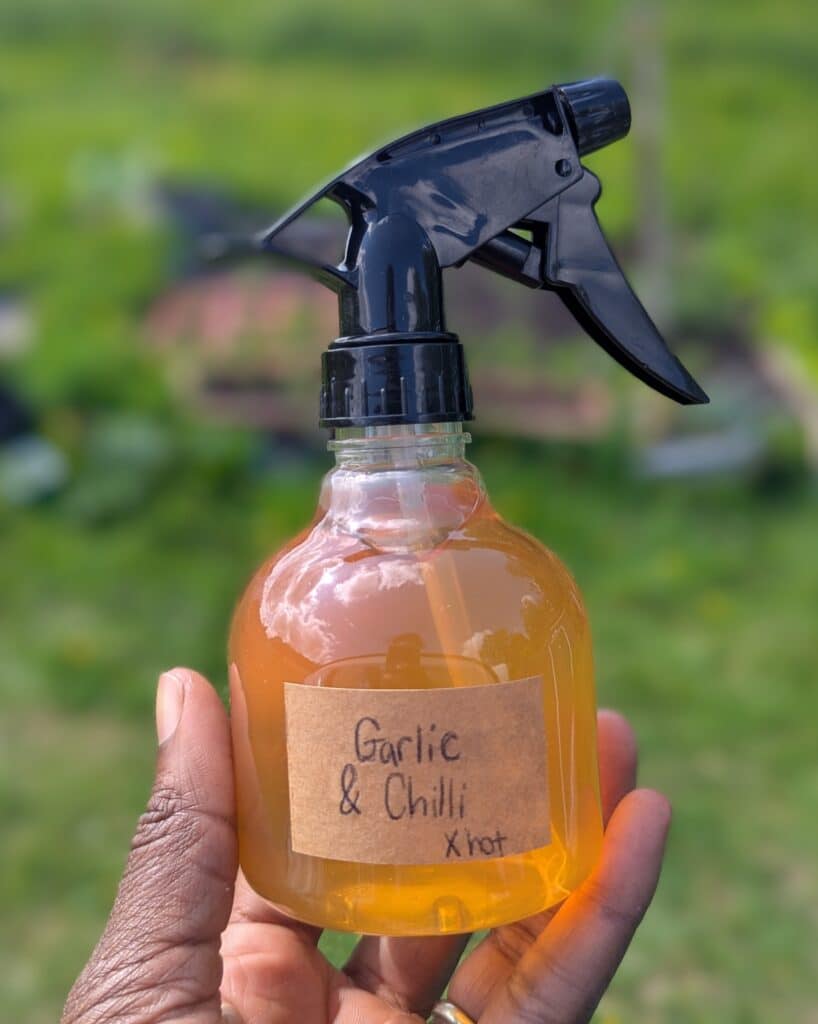
To stay chemical-free while managing pests, we’ve created a few of our own protective sprays:
- Garlic Spray – Disliked by aphids and many soft-bodied insects
- Neem Oil Solution – Gentle on foliage, powerful against mites and some fungal issues
- Hot Pepper Spray – Effective deterrent for chewing insects
These homemade remedies allow us to protect our plants without harming beneficial insects or disrupting the natural balance of our plot.
When the Weeds Win… Eat Them!
Despite our best efforts, “weeds” still sneak through. But not every unwanted guest is a problem.
As a forager, I’ve learned to recognise many of these plants as allies, not adversaries. So before you pull them out, ask: Is it edible? Is it medicinal?
Here are a few of the “weeds” I harvest regularly:
- Nettle – High in iron and great for teas or soups
- Plantain (ribwort and broadleaf) – Useful for bites, stings, and can be eaten raw or cooked
- Clover – Edible flowers, lovely in salads or teas
- Chickweed – Mild and crunchy, perfect in sandwiches
- Cleavers – Great Spring tonic, best in cold infusions
- Sorrel – Tangy and refreshing, adds brightness to dishes
- Dandelion – Leaves, flowers, and roots all edible and full of nutrients
- Japanese Knotweed – Young shoots taste like rhubarb and can be stewed or baked
“Learning to forage not only reduces food waste, it strengthens your awareness of the land and its abundance. Many so-called weeds arrive to heal the soil, and in doing so, they can help heal us too. *Always positively identify and research any foraged food before eating. When in doubt, leave it out!”
Celebrating Mother Earth and Community
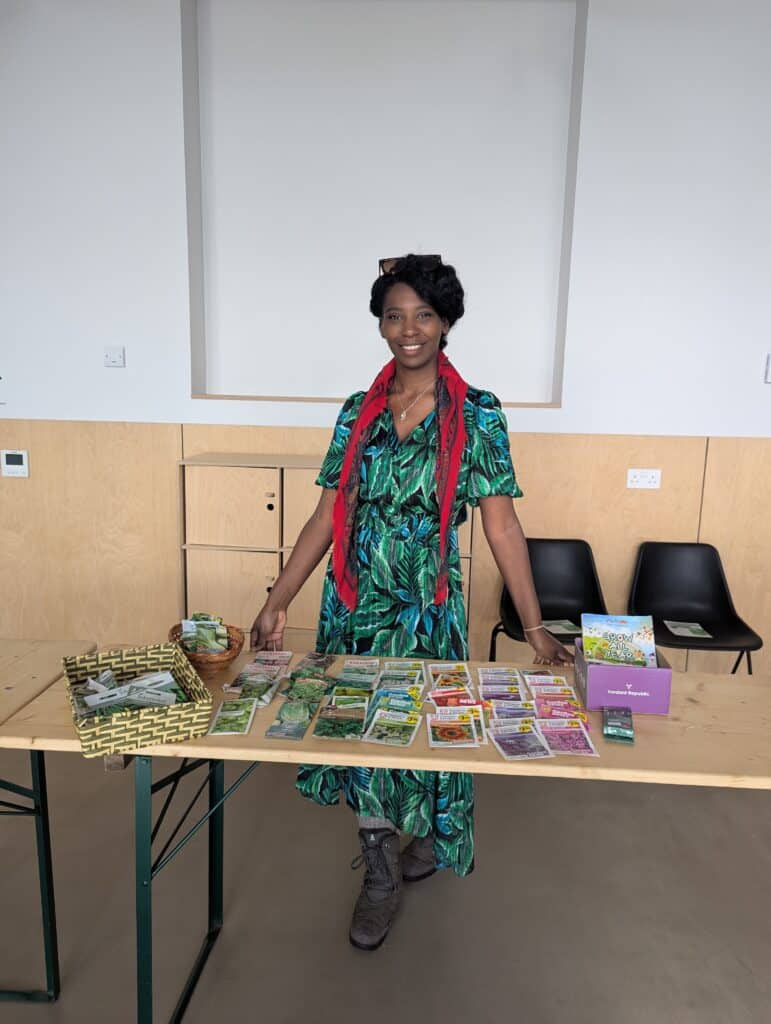
In March, I celebrated my first Mother’s Day as a Mother by hosting a Seed Swap at The Old School Thornhill. Over 70 gardeners, growers of all ages, gathered to share seeds, tools, stories, books, and pots.
It was more than an exchange; it was a community ritual, which I’m committed to making an annual event. A moment of recognition for Mother Earth, for our collective stewardship, and for the magic that happens when people gather with intention.
It helped me feel more rooted in this community and more hopeful for what’s to come.
What’s Next at The Forest Ridge?
We’re keeping the momentum going and planning our next improvements:
- Rebuilding the greenhouse to improve airflow and capacity
- Planting apple trees, thinking long-term and local
- Installing compost bins, turning organic waste into rich, home-grown fertility
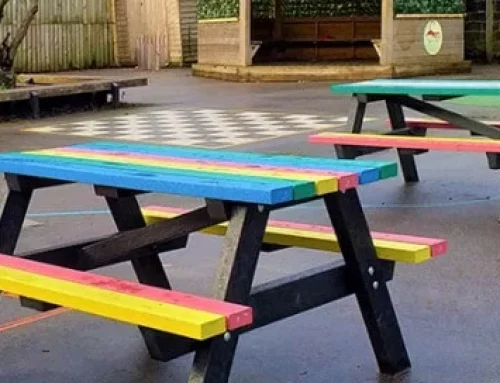
- Adding picnic tables, creating places for connection, rest, and shared meals
- And of course, adding more British Recycled Plastic raised beds, because two isn’t enough.
We’re also continuing to monitor soil pH and nutrient levels, adjusting our inputs to keep everything in balance.
And of course, the great tradition continues, collecting free, well-rotted horse manure to feed the beds for seasons to come.
Growing as a Metaphor for Life
There’s something deeply poetic about the flow of crop rotation. Every plant has its place. Every stage matters. Every resting period is part of the journey.
“As a grower, a forager, and a new Mother, I see the parallels more clearly than ever. This six-year dance with the land is teaching me patience, resilience, and the quiet strength that comes from letting things unfold in their own time.”
This Spring has already outshone the whole of last Summer, and it’s only just begun.
With full, muddy hands and a loving heart,
Sherel Moonfull
Grower | Forager | Mama, Moonfull.co.uk – Offering nature-based experiences across the UK.
(I’ll see you in the woods when I return from maternity leave! x)
If you want to find out more about the community projects we help, our friendly team are on hand 5 days a week at i[email protected], or 01422 419 555.
Updated May 2026
Do I need to buy a kit or can I make my own by just buying the lumber and fixing it together myself?
You can do either. If you have specific dimensions you wish to fill, you may prefer to buy full lengths and cut them to your exact requirements, saving a little money in the process. If you want something easy to assemble, pre-cut and with fixings supplied, a flat-packed kit is probably best for you.
Not at all.
One of the most common questions we’re asked is about leaching — especially when people are growing food. It’s a fair concern. If we care about soil health, we need confidence in the materials that surround it.
Independent laboratory testing under EU soil and groundwater regulations assessed the material for heavy metals, PAHs, PCBs and mineral oil hydrocarbons. The results were either extremely low or below detectable levels, all comfortably within strict environmental limits, including standards applied to soils used on children’s playgrounds
What this reinforces for us is that when flexible plastic waste is transformed into a dense, rigid, long-life structure, its environmental behaviour changes. It is no longer subject to constant abrasion or movement. Instead, it becomes stable infrastructure designed to remain in place for decades — keeping existing material safely in circulation rather than allowing it to fragment or be discarded elsewhere.
The recycled plastic acts as a thermal store, retaining heat and allowing for earlier germination.
Raised beds made from recycled plastic will last for many decades, maybe even 100 years, but ours come with a 25-year guarantee.
Recycled plastic lumber should always be stored laid flat on delivery, until you start work on it. It’s best to just leave everything on the pallet.
300mm is good general height for those people who are able to kneel while tending the bed; 600mm is the perfect height for wheelchair users and 750mm is a good height for those who would prefer to stand without bending too much.
500mm wide kits are perfect for those people who have only access to their raised beds from one side, for example if they are on the edge of a garden or against a wall, whereas 1 metre wide beds are ideal when access is possible from all around the raised bed.
There are a number of materials to choose from once you’ve decided that raised beds are for you. Wood is readily available and easy to work with but even when treated it rots quickly and is by far the least long lasting option. Sleepers are more durable but heavy and difficult to cut. They may also have been treated with preservatives in the past which will leak into your soil making it toxic. Bricks need a building expert on hand to ensure a safe construction and can also leak toxic lime into your soil. Concrete blocks will leave you needing either machinery or a strong team of helpers to put into place.
Recycled plastic raised beds are a permanent, maintenance-free option that come in an easy-to-construct kit. No heavy lifting, no plant hire and no team of body-builders required
They are made from a mix of High Density Polyethylene, Low Density Polyethylene, Polypropylene and Polythene. These plastics are derived from a wide variety of plastic products from hay bale wrapping, computer cases and car bumpers to vegetable crates and bottle tops but all belong to the polyolefin group of plastics.
Watch more about it here:
Absolutely! Raised beds, especially British Recycled Plastic raised beds, are a worthwhile investment for any gardener. Here’s why:
– Durability: Made from 100% recycled plastic, they’re weatherproof, rot-resistant, and built to last for decades with no maintenance.
– Improved Soil Control: You can create the perfect soil mix, free of weeds and contaminants, for healthier plants.
– Better Drainage: Prevents waterlogging, keeping roots healthy and promoting better growth.
– Eco-Friendly: Using recycled plastic reduces waste and supports sustainability.
– Accessible and Easy to Use: Taller beds are easier to plant and harvest, especially for those with mobility challenges.
– Cost-Effective: Their long lifespan and low upkeep make them a smart, long-term choice.
With British Recycled Plastic raised beds, you get a durable, sustainable, and hassle-free gardening solution, making them well worth it for any gardener.













Leave A Comment
You must be logged in to post a comment.