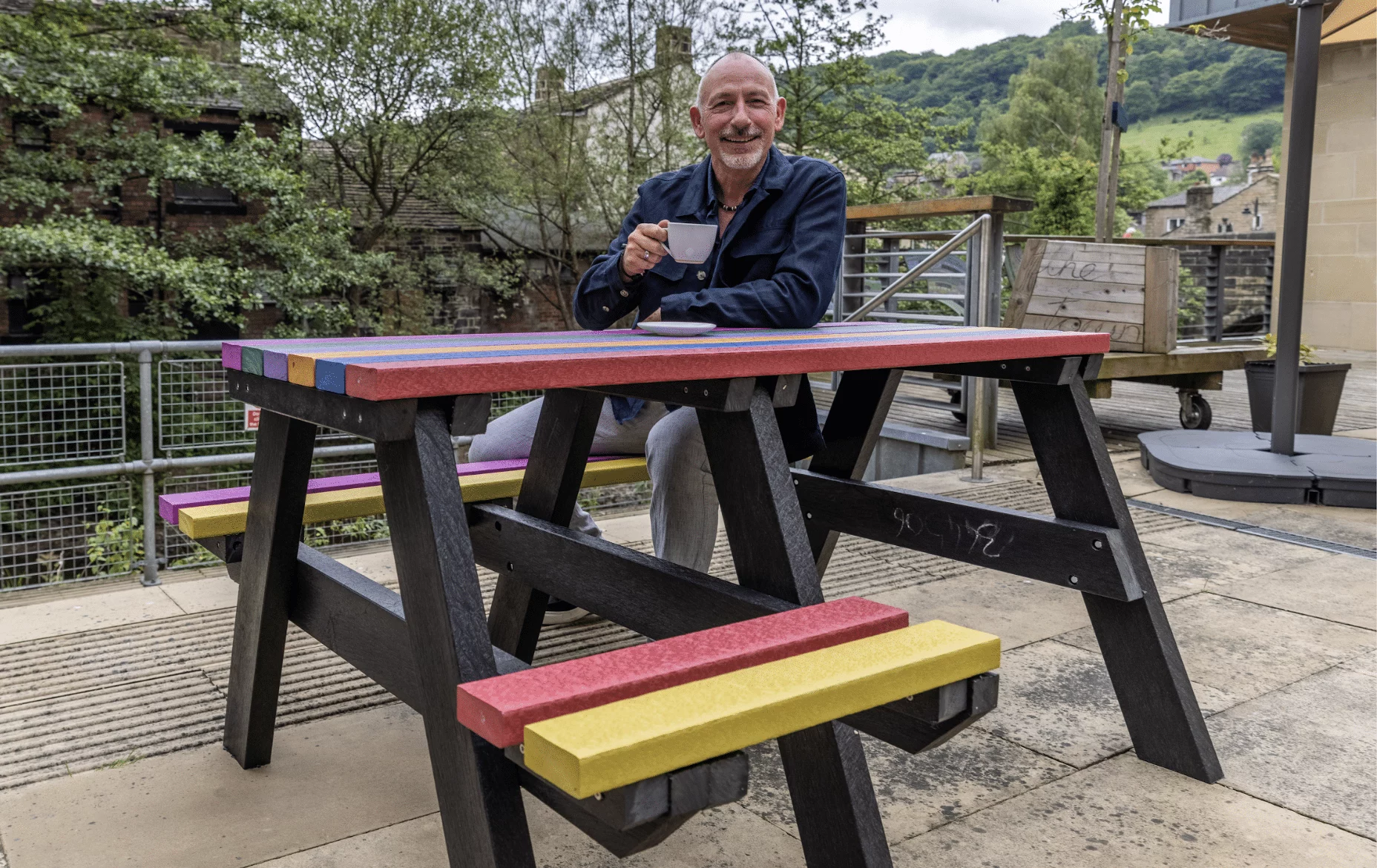

Innovators around the world are turning waste materials and food waste – popcorn, coffee grounds, banana stems – into biodegradable plastics and packaging. These developments show how circular economy thinking can reduce reliance on fossil-fuel plastics and keep valuable resources in use for longer.
At British Recycled Plastic, the same principle drives our work. We transform UK plastic waste into durable, long-lasting products that reduce landfill, cut demand for virgin materials, and support a more sustainable future.
- Scientists are turning waste into biodegradable plastics and packaging
- Examples include popcorn-based packaging, coffee-ground bioplastics and banana-stem trays
- These innovations help replace fossil-fuel plastics and reduce microplastic pollution
- The circular economy focuses on reusing, recycling, and keeping materials in use for longer
- British Recycled Plastic applies the same principle in the UK
- We turn 100% British waste plastic into long-lasting outdoor products
- Our products help reduce landfill, cut virgin plastic use, and support sustainability goals
Around the world, scientists and innovators are finding remarkable new ways to turn waste into useful materials — from popcorn packaging to plastics made from coffee grounds and banana stems. At British Recycled Plastic, we share the same mission: keeping resources in use and reducing the need for virgin materials through a truly sustainable circular economy.
Through our own research into sustainable materials, we’ve found tons of positive projects across the globe, all working to create plastics from alternative, sustainable materials. For example, a biodegradable Styrofoam alternative made from puffed corn kernels.
Styrofoam is made from polystyrene, a fossil fuel–based plastic that can take hundreds of years to break down into harmful microplastics. Because this type of plastic has only been manufactured for about 50 years, scientists are still studying its true longevity.
When exposed to ultraviolet radiation from sunlight, polystyrene’s polymer chains become brittle and start to crack, suggesting that the material will eventually fragment into microscopic granules. As of yet, however, scientists aren’t sure how many centuries it takes for the sun to ‘do its work’. According to some plastics experts, the “500 years – forever” estimates are simply another way of saying “a really, really long time.”
The Problem with Polystyrene Packaging
Around 15 million metric tons of polystyrene are produced globally every year. That’s an enormous amount — especially considering the material is around 95% air, meaning it weighs very little but still takes up huge amounts of space.
Polystyrene remains popular with many businesses because it offers excellent protection for fragile goods and costs just pennies to manufacture. However, the environmental cost is far greater. Once discarded, these lightweight packing materials linger for centuries, breaking down into microplastics that pollute ecosystems and oceans.
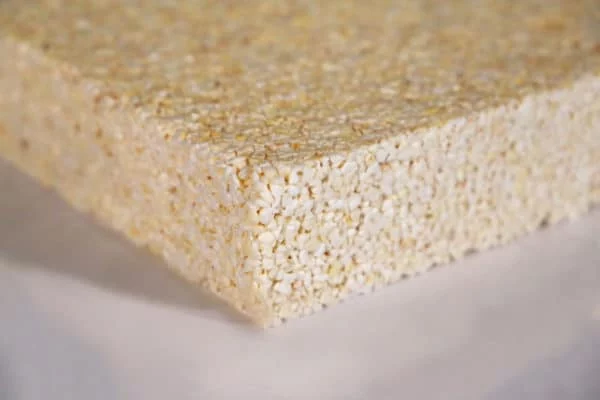
Recognising this, German researcher Alireza Kharazipour decided it was worth experimenting with puffed corn kernels as a replacement for Styrofoam packaging peanuts. His innovation led to a company that now produces bioplastic made entirely from corn — a material that’s fully biodegradable and sustainable.
Large popcorn-based pieces can be compressed into specific shapes to hold different products, or easily sawn and shredded at the end of their life for reuse or composting. This simple but brilliant idea demonstrates how natural materials can replace fossil fuel–based plastics in a circular economy, reducing waste while protecting the planet.
As we use recycled packaging materials to create our own sustainable picnic tables, furniture and building products, this ‘popcorn packaging’ innovation inspired us to explore other brilliant examples of alternative packaging being developed for the circular economy around the world.
Creating Bioplastics from Coffee Grounds
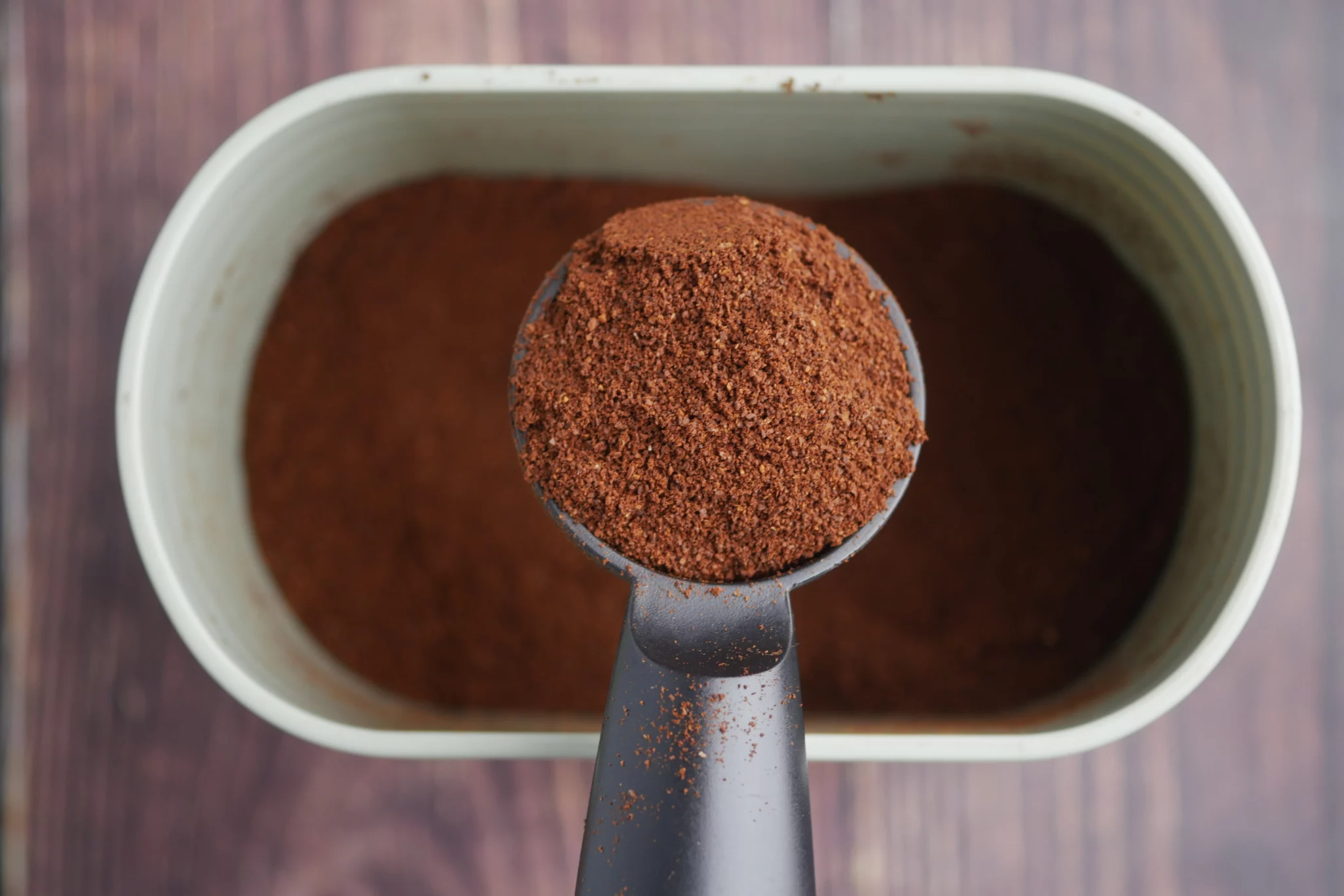
Another exciting development in sustainable materials is bioplastic made from used coffee grounds. Over six million tons of spent coffee grounds are produced globally every year, with most ending up in landfills.
Researchers at Yokohama University in Japan have found a way to extract cellulose nanofibres from used coffee grounds. Their analysis revealed that the end material could be used to form biodegradable plastic resins — the building blocks for many commercial and consumer plastics.
Australian researcher Dominik Kopp has gone a step further by developing a method to convert coffee waste into lactic acid, a core ingredient for making biodegradable plastics.
“We assembled a synthetic pathway to convert the most abundant sugar in the coffee grounds, mannose, into lactic acid,” Kopp explains. “Lactic acid can be used in the production of biodegradable plastics, offering a more sustainable and environmentally friendly alternative to fossil fuel-derived plastics.”
Turning Food Waste into Biodegradable Packaging
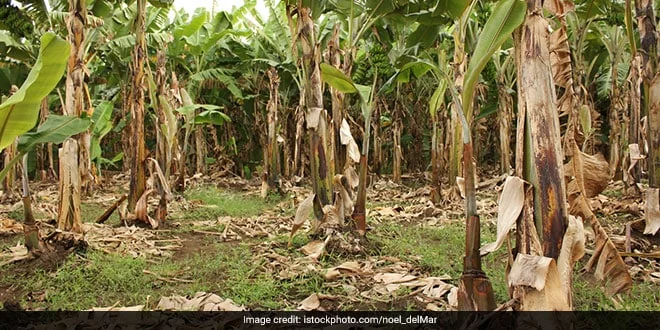
A method to transform banana plantation waste into biodegradable, recyclable packaging material has also been developed.
“We were particularly interested in the pseudostems – basically the layered, fleshy trunk of the banana plant which is cut down after each harvest and mostly discarded on the field, says Associate Professor Jayashree Arcot at the University of New South Wales, Australia.
“Depending on how we pour the material and how thick we make it, we can make the trays that you see for meat and fruit. Except of course, instead of being Styrofoam, it is a material that is completely non-toxic, biodegradable and recyclable.”
Sugars & Proteins for Bioplastics
Bacteria found in the sugars, starches, and proteins from discarded food waste can provide the building blocks for bioplastics. Microorganisms feed on these natural materials and produce PHAs (polyhydroxyalkanoates) — compounds that can be separated and moulded into plastics.
- PHA is both biodegradable and compostable, and can be used to make a wide range of sustainable packaging materials, including:
- Injection-moulded packaging
- Plastic bags and bottles
- Straws and food wrappers
Using waste food as a raw material has an extra environmental benefit — it prevents organic waste from going to landfill, where it would otherwise generate methane, a powerful greenhouse gas. This process could also help reduce some of the 300 million tonnes of plastic waste produced globally each year.
Interestingly, methane from food waste and other industrial processes can also be converted into PHA when combined with bacteria and carbon, turning a harmful emission into a useful material.
Biodegradable materials such as corrugated cardboard and bioplastics break down naturally within about a year. Compostable materials, like starch-based packing peanuts, go one step further — decomposing fully while also enriching the soil with nutrients.
Understanding the Circular Economy
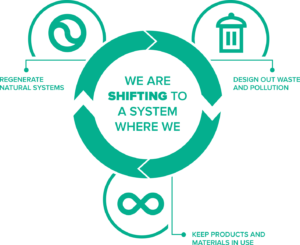
Credit: ellenmacarthurfoundation.org
The circular economy is based on a simple principle — everything has value, and nothing is wasted.
In contrast, a linear economy follows the traditional “take–make–dispose” model: raw materials are extracted, transformed into products, used, and then discarded as waste. In this system, value is created by producing and selling as many items as possible, often without considering the environmental impact.
The circular economy takes a completely different approach. It looks at every stage of a product’s lifecycle to:
- Use fewer resources in the first place
- Keep materials in circulation for as long as possible
- Extract maximum value while in use
- Recover, recycle, and regenerate products at the end of their life
This approach not only helps tackle climate change but also supports economic growth and job creation. By turning waste into raw materials — as discussed in the earlier sections — we can reduce the need for virgin plastic and keep valuable resources in use.
While it might sound like a new idea, the concept of the circular economy has been around for generations. For our grandparents and great-grandparents, waste didn’t exist — everything was reused or repurposed. It was only with the rise of industrialisation and mass production that disposable materials became the norm.
Today, humans are using resources at an unsustainable rate — equivalent to 1.75 planets. By embracing the circular economy, we can rethink how products are made, used, and reused, creating a more sustainable and resilient future.
At British Recycled Plastic, we’re proud to support this movement through sustainable manufacturing that keeps materials in use and out of landfill.
British Recycled Plastic’s Role in the UK Circular Economy
At British Recycled Plastic, we’re proud to play an active role in the UK circular economy, turning waste materials into durable, long-lasting products. By transforming plastic waste into raw materials, we keep valuable resources in use and reduce the need for virgin plastic.
One of our main goals is to produce high-quality goods while minimising waste and maximising reuse. Our mission is to close the loop — ensuring every piece of recycled plastic we handle is given a new purpose through smart design and manufacturing.
Our products are engineered from 100% British recycled plastic and guaranteed for 25 years. They’re built to last, maintenance-free, and designed to help organisations lower long-term costs while supporting a sustainable, circular economy.
We supply a wide range of products to public and private sector organisations across the UK, including:
- Recycled plastic furniture for schools, parks, and workplaces
- Raised beds for gardens and allotments
- Planters for community spaces
- Bins, fencing, and landscaping materials for durable outdoor use
By giving plastic waste a new life, we help keep it out of landfills and away from incineration, where it could release harmful emissions.
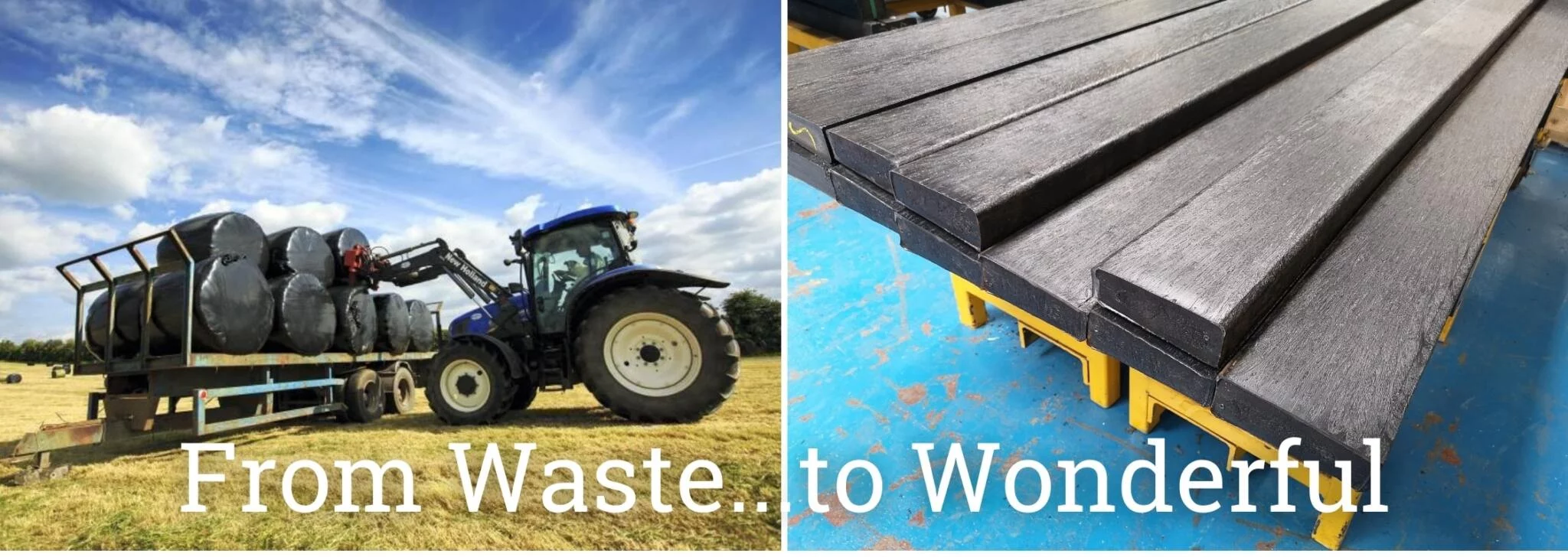
Our supply chains include recycled plastic from UK farms, such as the black plastic wraps used to cover hay bales. This material is cleaned, shredded, and repurposed into strong, long-lasting products that can be used for decades.
You can even watch a video on our website showing how our part in the circular manufacturing process works — demonstrating how we truly make “good use of the things that we find.”
At British Recycled Plastic, we live by the mantra “From Waste to Wonderful.” We’re committed to reducing landfill, supporting the circular economy, and helping create a more sustainable future through recycled plastic products that are tough, reliable, and built to last.
Proud To Be Leading The Way
Every new idea in sustainable packaging brings us closer to a truly circular economy. At British Recycled Plastic, we’re proud to lead the way in creating long-lasting, sustainable products that keep plastic waste in use and out of landfill.
For more information, contact us on 01422 419 555 or email [email protected]
British Recycled Plastic works hard to ensure our content is factual. Here are the sources of information used in this blog:
- sciencelearn.org.nz,
- goodnewsnetwork.org
- thedieline.com
- packaginginsights.com
- fdiforum.net
- foodprint.org
- ringvallcircularity.consulting
Written by the British Recycled Plastic Team
Updated May 2026
Recycled Plastic and Composite materials typically combine different elements, like wood fibres and plastics, for enhanced strength and durability. However, due to their composition, composites can’t be easily recycled. On the other hand, recycled plastic, like that from British Recycled Plastic, originates solely from reused plastic, making it fully recyclable and a more sustainable choice. It lasts longer, offers eco-friendly benefits, and can be continually recycled, minimizing environmental impact. Choose British Recycled Plastic for durable, sustainable solutions that make a lasting difference.
British Recycled Plastic is made from 100% uk plastic waste.
Our recycled plastic is made with a wide variety of plastic waste products from industrial, commercial, agricultural and domestic sources. These materials are shredded, melted and mixed together to create our incredibly strong plastic lumber.
The most common plastic types used are High Density Polyethylene, Low Density Polyethylene, Polypropylene and Polythene. These are all members of the Polyolefin family, so mix well together at the same temperature.
These materials form 99% of the content. They are mixed with 1% masterbatch, for colour control, which is also made from entirely recycled material.
-
Wash synthetic clothes less often or use microfibre filters.
-
Drive less to reduce tyre wear.
-
Choose durable, recycled plastic products instead of single-use or short-life materials.
-
Support the circular economy by buying products made from recycled plastic.
Every British Recycled Plastic product — from a school bench to a garden planter — helps keep waste in use, not in nature, and prevents new microplastics from forming.
The IUCN reports that synthetic textiles cause about 30% of ocean microplastics, and tyre wear contributes up to 10%. Other sources include paints, packaging films, and fishing gear.
Products from British Recycled Plastic are part of the solution, not the problem — they’re built to last decades, resist wear, and can be fully recycled again at the end of their long life.
Studies show traces of microplastics can build up in the human body over time, especially from synthetic fibres and airborne dust.
Using durable recycled products—like British Recycled Plastic furniture and lumber—helps reduce the amount of plastic that can fragment into dust or particles, contributing to a cleaner environment overall.
Microplastics have been detected in drinking water, seafood, salt, and even the air. They’re mainly absorbed from environmental pollution caused by disposable or fast-wearing plastics.
Because British Recycled Plastic’s materials are solid and sealed, they don’t release particles into the environment — helping to reduce the sources of this contamination.
Yes — research shows that microplastics can accumulate in marine life and enter the human food chain, with potential effects on health and ecosystems.
By creating long-lasting, sustainable recycled plastic products, British Recycled Plastic helps tackle this issue at its source: preventing plastic waste from breaking down and entering nature.
The main sources of microplastics are synthetic textiles, tyre wear, city dust, paints, and marine gear. These materials shed or fragment through friction, washing, or weathering.
In contrast, British Recycled Plastic’s long-life products—such as benches, picnic tables, and raised beds—are chemically stable and don’t flake or crumble, helping to reduce microplastic pollution by locking existing waste into durable, reusable items.
Microplastics are tiny plastic particles less than 5mm in size, formed when larger plastic items break down or when synthetic materials shed microfibres. They’re found in oceans, rivers, soil, and even the air.
British Recycled Plastic’s products are made from dense, solid recycled polymers that do not break down or shed, meaning they do not produce microplastics during use.
This is one of the most common questions people ask — especially when they’re growing food. It’s a sensible concern, because soil health matters.
Independent laboratory testing has examined recycled plastic material for a wide range of substances including heavy metals, PAHs, PCBs and mineral oil hydrocarbons. The results were either extremely low or below detectable levels and comfortably within strict environmental limits. The material also met regulatory standards used for soils on children’s playgrounds, which are among the most cautious benchmarks applied to outdoor materials.
An important factor is the way the material behaves once it is manufactured. Flexible plastic waste — such as agricultural films or packaging — can contribute to microplastic pollution when it remains thin, mobile and subject to constant friction. In contrast, when that same material is processed into dense, rigid structural profiles, its environmental behaviour changes significantly.
Recycled plastic products are solid, stable structures designed to remain fixed in place for decades. They are not exposed to the repeated abrasion, stretching or high-speed movement that typically generates microplastics, such as in synthetic textiles or vehicle tyres.
In practical terms, this means the material functions much more like long-life outdoor infrastructure than disposable plastic. Rather than fragmenting, it keeps existing plastic safely stabilised and in use for many years — helping prevent that material from becoming waste elsewhere.