
Timber is widely perceived as a low-cost material for outdoor assets, but this perception is misleading. While initial purchase costs are low, timber requires ongoing maintenance, labour, and frequent replacement due to weathering, wear, and environmental factors. These cumulative costs often exceed the original investment multiple times over, creating continuous budget strain for organisations.
When evaluated on a whole-life cost basis, recycled plastic lumber proves to be a financially sustainable alternative to wood.
Table of Contents
- Timber looks cheap upfront, but becomes expensive over time
- True costs are hidden across maintenance, labour, and replacements
- Timber deteriorates quickly in real-world conditions (weather, usage, vandalism)
- Recycled plastic has a higher upfront cost but near-zero maintenance
- Whole-life cost analysis shows recycled plastic is better value
Why Timber Costs More Than You Think
Timber has a certain charm. It’s familiar, traditional, and for decades it’s been the default material for benches, fencing, planters and boardwalks across the UK.
But there’s a reality many organisations run into after it’s too late: Timber is rarely as cost-effective as it seems.
It’s not a bad material, and often looks to be the most affordable choice for tight budgets. But its true costs are spread out over time, hidden across different budget groups, and rarely looked at as a whole.
Across councils, schools, and housing providers, the pattern is the same. Timber feels like the safe, low-cost choice upfront. That is, until the ongoing maintenance and replacements start quietly eating into budgets year after year.
The Illusion of a ‘Low-Cost’ Purchase
Timber’s biggest selling point is usually the upfront price. On paper, it looks affordable.
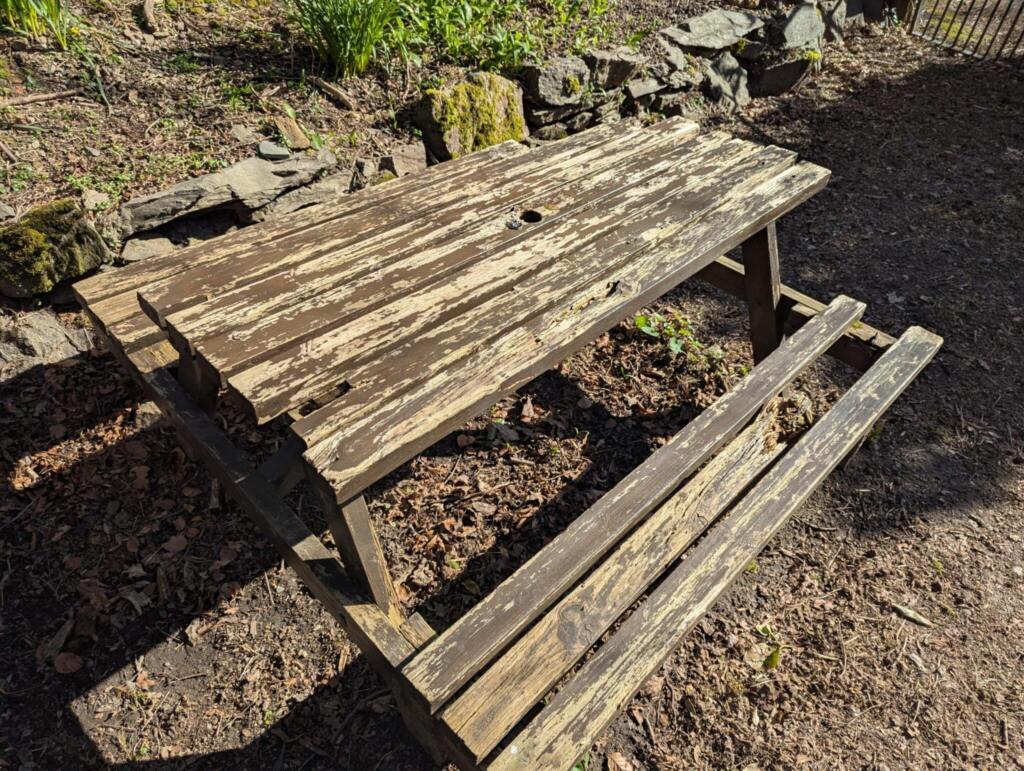
But that first invoice is only the beginning. The real cost shows up after installation — through rot, movement, cracking, repainting, repairs, and replacements. When organisations budget only for purchase, they miss the bigger picture: year-round maintenance and replacement cycles cost more than the timber itself.
Maintenance Budgets: The Silent Budget Eater
Every year, public and private organisations allocate thousands to keep timber in “acceptable” condition. And while on paper, this maintenance is things like paint and varnish, it doesn’t account for labour, time and disruption to your services.
Let’s break down the reality:
- Labour costs are the biggest expense when it comes to maintenance. Someone has to go out, sand it down, recoat it, fix loose boards, treat rot, or replace sections that have failed.
- Maintenance frequency increases as wood ages. What starts as an annual job becomes twice a year… then quarterly.
- Treated timber isn’t maintenance-free: Even pressure-treated wood, designed to last longer and advertised as a better option, requires regular intervention to stop moisture damage and decay.
- Every visit costs money: Every time timber structures have to be tended to, there’s the cost of vehicles, equipment, manpower, and admin time to account for.
By year five, ongoing maintenance often outweighs the original purchase price. By year ten, many organisations have effectively paid for the same item two, three, or even four times over — through repairs, treatments, and manpower.
Over a 25-year lifespan, that cycle continues. It’s not unusual for a single timber asset in a public space to be repaired, partially replaced, or fully renewed multiple times — pushing total spend to several times the original purchase price once labour and maintenance are taken into account.
Replacement Cycles: The Hidden Annual Liability
Most organisations underestimate how quickly timber deteriorates in real-world environments. On paper, you can squeeze 10–15 years out of treated timber but the reality is very different. Through research and experience, here are estimate replacement cycles:
- High footfall sites: 3–5 years.
- Coastal or wet locations will have timber swelling, rotting and degrading within 2–4 years.
- High-vandalism areas mean the wood will need sanding, repainting, and treating or – worse still, replacing – in as little as a few months
- Schools and community spaces: Constant use means faster wear, constant repairs
- Sports and leisure environments: With UV, frost and moisture to consider, timber breaks down incredibly quickly
So, while the cost per item may seem small, the replacement cycle turns timber into a recurring annual liability. Multiply this across a housing estate, council ward, campus, or woodland walkway… and the numbers become staggering.
This isn’t budget planning. It’s budget churn.
How Recycled Plastic Stops Budget Churn
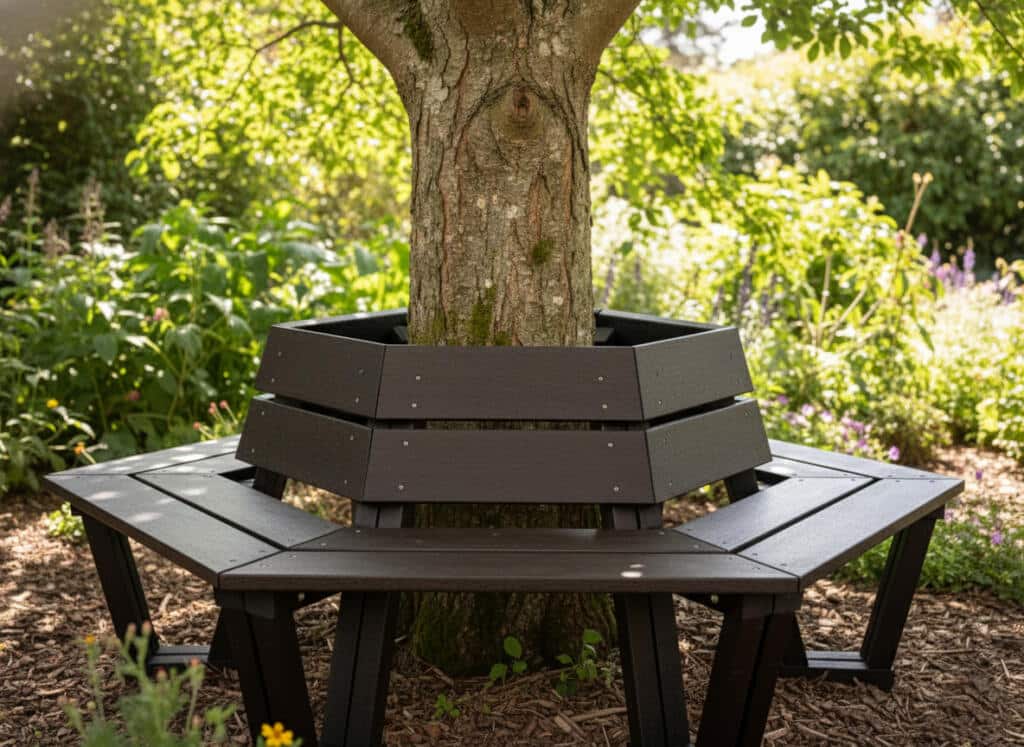
Recycled plastic fundamentally shifts the equation.
Rather than having to budget for the ongoing maintenance and short replacement cycles of timber, recycled plastic removes additional spending entirely.
The Benefits of Recycled Plastic
Totally Weatherproof
Recycled plastic lumber is non-porous, which means weather is no longer a concern. Without absorbing moisture through torrential downpours, ice and frost, recycled plastic timber stays structurally strong and free of rot. It’s UV-stable, which means there’s no bending to worry about during heatwaves, and its colour won’t fade in prolonged sun exposure.
Sun, sea & structural integrity
Recycled plastic – whether used for benches, walkways or fencing – is perfect for high-wind, salty locations like the coast. The plastic is naturally resistant to wind and salt, which can often burrow into wood, causing damage. There’s no need for additional treatments to keep it looking good in these climates, either.
Maintenance free
Our specification grade, recycled plastic timber, needs almost zero maintenance. And the maintenance that is required? The occasional wipe down with water. Recycled plastic is incredibly easy to keep clean, and its non-porous surface makes graffiti, stains and dirt easy to wipe off. This helps keep your space looking fresher for longer – without added costs.
We’re so proud of our recycled plastic and its effectiveness that our products are available with a 25-year guarantee. And that’s without painting, sanding, treatments or reactive repairs.
The key difference isn’t just durability — it’s predictability. Install once, and the asset stays in service year after year, without quietly draining labour and maintenance budgets.
Organisations choose recycled plastic not because it’s fashionable, but because it stops financial waste and frees up teams to focus on higher-value work. And if style is at the forefront, we offer recycled plastic lumber in a variety of colours to suit any project.
“We have found the recycled plastic lumber and decking boards incredibly easy to work with and find it a suitable replacement for wood without any of the negative qualities of wood such as rotting and constant maintenance. We believe that the slight extra cost of plastic lumber will be outweighed by its longevity and lack of maintenance. – Graham Dodds, Bridge House Marina & Caravan Park
Why Timber Keeps Getting Chosen Anyway
Despite the topic of wood vs recycled plastic being at the forefront of sustainability conversations, timber is still often the first choice. It appears cheaper because:
- Maintenance labour sits in a different budget
- Replacements are treated as an inevitable recurring cost
- Existing maintenance teams mask the true cost
- “That’s how we’ve always done it” goes unchallenged

When costs aren’t looked at with a ‘full-picture’ view, additional spend goes unmeasured and overspending stays invisible.
Artificial lumber does come with a higher upfront cost, often deterring procurement teams. But this initial cost dramatically reduces any additional spend. Over time, that’s where the value becomes clear.
Recycled Plastics: Life-Long Value and Sustainability
Watch our Wood V’s Recycled Plastic Fencing Video for real life examples :
Timber’s cost is never the price seen on the receipt: It’s the years of labour, disruption, maintenance, and replacement that come after.
For organisations under constant financial pressure, choosing materials with a lower whole-life cost isn’t a “nice to have” anymore — it’s a practical financial decision.
If you’ve ever wondered what your timber assets are really costing over 10, 20, or 25 years, that’s a conversation worth having. We’re here to help you run the numbers.
Our knowledgeable team are on hand to discuss your upcoming projects and how recycled plastic timber can work for you.
Email us at: [email protected], or call us: 01422 419 555
Written by the British Recycled Plastic Team.
Monday 13th April 2026.
British Recycled Plastic is made from 100% uk plastic waste.
Our recycled plastic is made with a wide variety of plastic waste products from industrial, commercial, agricultural and domestic sources. These materials are shredded, melted and mixed together to create our incredibly strong plastic lumber.
The most common plastic types used are High Density Polyethylene, Low Density Polyethylene, Polypropylene and Polythene. These are all members of the Polyolefin family, so mix well together at the same temperature.
These materials form 99% of the content. They are mixed with 1% masterbatch, for colour control, which is also made from entirely recycled material.
Recycled plastic lumber is a sustainable alternative to timber is is typically just as strong, if not stronger than wood. It is widely used in applications where timber would traditionally be used however, due to its dense, non-porous composition, it is longer-lasting and low maintenance. Unlike wood, British Recycled Plastic lumber won’t rot, splinter, split or warp.
British Recycled Plastic provide a range of accessibility-focused outdoor furniture, including wheelchair-accessible picnic tables, benches designed for reduced mobility, and easy-access walkways. Our products are crafted to ensure inclusivity and comfort for all users. Made from 100% recycled materials, British Recycled Plastic furniture is weatherproof, maintenance-free, and built to last for decades. To find out more about our range, give us a call at 01422 419 555—we’re happy to help!
93% of the grid is an open structure, meaning that the vast majority of rain that falls on them heads straight back to the water table, rather than being forced into an overburdened drainage system, as would be the case with tarmac.
Any method of “slowing the flow” of rain water reduces the risk and subsequent impact of flooding.
Yes, British Recycled Plastic garden furniture is specifically designed to be left outside all year round. Unlike wood or metal, our recycled plastic furniture is completely weatherproof and built to withstand the harshest outdoor conditions, including rain, snow, frost, and UV exposure.
Here’s why it’s perfect for outdoor use:
– Weather Resistance: It won’t rot, warp, crack, or rust, even in extreme weather conditions.
– UV Stability: The colour is built into the material and won’t fade in the sun.
– Low Maintenance: No need to cover or store it during winter—just give it a quick clean when needed.
With British Recycled Plastic garden furniture, you can enjoy durable, sustainable, and hassle-free outdoor furniture that stays looking great, whatever the weather.
Painting British Recycled Plastic garden furniture is not recommended or indeed needed. Unlike wooden garden furniture, recycled plastic plastic garden furniture is designed to be low-maintenance and retain its colour without the need for painting or staining. One of the many benefits of our garden furniture is its long-lasting, fade-resistant color. Our furniture is available in a variety of colors (even rainbow!) to suit any outdoor space, so there’s no need for additional painting. Opting for recycled plastic garden furniture ensures you get a durable, weather-resistant, and eco-friendly product that looks great for years with minimal effort. For a vibrant, long-lasting, value added alternative to traditional options, choose recycled plastic garden furniture over painted outdoor furniture
British Recycled Plastic picnic tables are either fully black, fully brown or with black or brown frames and seats and tops in any combination of blue, red, forest green, lilac, pink, orange, grey and bright lime.
No, British Recycled Plastic picnic tables will never split or splinter in any way.
Our British recycled plastic products are designed to last well over 100 years, though the exact lifespan could range from 101 to even 500 years—we simply don’t know yet! The same properties that make plastic problematic in some contexts, such as its durability, are what make it exceptionally “good” here, ensuring long-lasting, sustainable performance in our products.