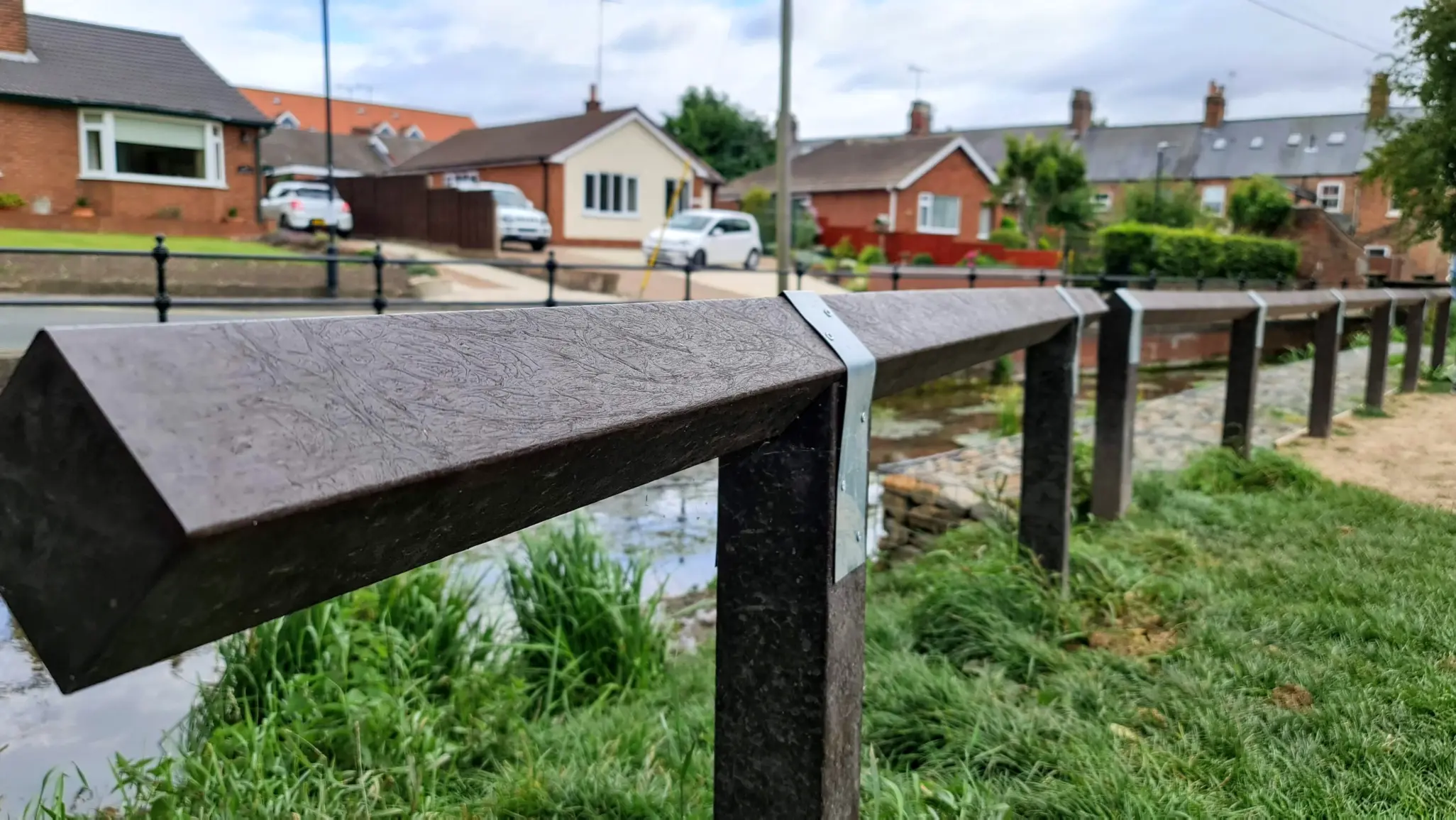

Recycled plastic lumber is quickly becoming the preferred, sustainable alternative to traditional timber for construction and landscaping projects. Designed for durability, sustainability, and with minimal maintenance required, it offers a long-lasting solution that resists rot, splintering, and weather-related degradation.
However, there are some differences when working with recycled plastic over wood: Its density, thermal behaviours, and smooth surface require specific tools and techniques, and only certain fixings will work.
We recently launched a new YouTube FAQs series that gives you all the answers to our most commonly asked questions. Alongside it, this guide covers everything you need to know—from cutting and drilling to fixing, expansion, and maintenance—so you can feel confident enough to work with recycled plastic lumber.
Table of Contents
- How Recycled Plastic Differs From Timber
- How To Cut Recycled Plastic Lumber
- How To Drill Plastic Lumber
- The Best Screws For Plastic Lumber
- Bolting Recycled Plastic Lumber
- Understanding Thermal Expansion and Contraction
- How To Work With Recycled Plastic: Alternative Fastening Methods
- Best Practices for Storing Plastic Lumber
- Repairing and Maintaining Plastic Lumber
- Top Tips for Working With Recycled Plastic
- Use a mitre-saw at a medium-high speed for smooth cuts
- Always pre-drill pilot holes to prevent splitting or binding
- We recommend stainless steel, countersunk screws
- Allow for thermal expansion and contraction, especially outdoors
- M10, hex-head bolts for general fixings, and mushroom-headed bolts for visible fixings
- Minimal maintenance required—just simple cleaning
How Recycled Plastic Differs From Timber
Our artificial lumber is designed for longevity and performance. This sustainable choice won’t rot, splinter or degrade over time like timber and comes with our 25-year guarantee. Its density makes it highly durable and versatile for just about any structural project – whether you’re looking to build raised beds in the garden, procuring materials for a public space revamp or building decking at home.
While our recycled plastic lumber can replace timber in just about any project, it behaves differently due to its weight and rigidity. As such, only certain installation methods can be used.

How To Cut Recycled Plastic Lumber
Our plastic lumber comes in a variety of styles and sizes, but it’s likely you’ll still need to cut it down for size.
To cut recycled plastic lumber, we recommend using a mitre saw at a medium-high speed. This provides a buttery-smooth, precise cut. You’ll need to keep the blade clean and sharp for a good cut – this can make all the difference in how it feels when cutting the plastic wood and the final finish.
The blade should be cleaned between cuts, as the saw’s rotations may melt some residual plastic onto the blade’s face. To ensure you’re always using a sharp blade, we recommend having two on rotation; once one is blunt, you can swap it out for the other while one gets sharpened.
How To Drill Plastic Lumber
We recommend drilling and mechanical fixings for our plastic lumber. Use a high-speed steel drill to drill screw holes to the thickness of the screw shank, so only the threads bite into the material.
Pair the drill bit with a countersink to create a clean and flush finish.
Do I need pilot holes for artificial lumber?
Pilot holes are essential when drilling recycled plastic lumber. Without pilot holes, stainless steel screws may strip, snap or bind too tightly – making them difficult to remove. You can see our video on how to properly size a pilot hole here.
The Best Screws For Plastic Lumber
Standard screws used for wood and chipboard are suitable for plastic lumber, but we typically recommend stainless steel, countersunk screws for a flush finish.
Always pre-drill pilot holes and use a countersink piece. Drill a hole slightly smaller than the diameter of the screw to ensure there’s a tight, secure fit.
For larger joints, such as bearers, you should use bolts.
Bolting Recycled Plastic Lumber
Our plastic lumber is ideal for bigger structures; however, it is heavier and more substantial than timber. When using thicker sections of lumber for heavy-duty structural work, it’s better to use bolts than screws.
For bolts, we use M10, hex-head bolts for general fixings, and mushroom-headed bolts for visible fixings to create a neat finish. We also use stainless steel washers and nuts to match the durability, longevity and corrosion-resistance of our plastic wood.
Fully-threaded bolts aren’t always necessary; partially threaded bolts work just as well and are a little more economical. As long as the bolt length is long enough to fit through the lumber and tightens into a nut on the other side, the connection will be completely secure.
How to Drill Bolt Holes
To bolt plastic lumber, we suggest using a 16mm spade bit at a slow speed to create 10mm holes. This gives a little extra clearance to make on-site alignment easier and ensures the thread doesn’t bite into the material.
Understanding Thermal Expansion and Contraction
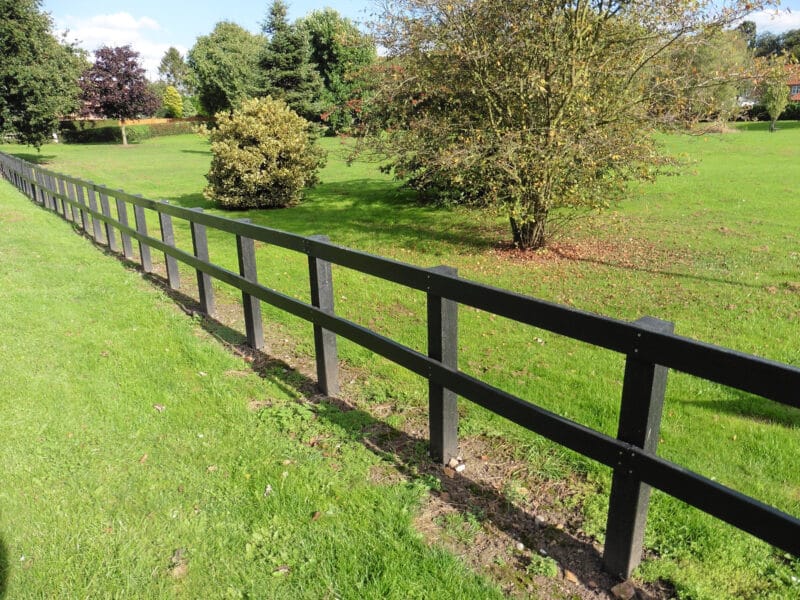
Recycled plastic lumber expands and contracts in different temperatures, and it’s crucial you account for this when planning your project – particularly when installing fencing. Screws need a little wiggle room to allow for the natural expanding and contracting that occurs in different temperatures.
Expansion gaps are more important when fixing two different materials together. For example, a gap should be left where rails butt up against each other or a post.
Fixing Recycled Plastic to Recycled Plastic
Two pieces of recycled plastic lumber will have the same thermal properties, so they’ll expand and contract at the same time. To ensure there’s a secure fix, make sure the screws thread into both pieces. There shouldn’t be a need to leave an expansion space.
Fixing Recycled Plastic to Different Materials
You will need to leave a larger expansion hole when fixing plastic lumber to other materials such as timber, concrete or steel. Again, the thread needs to grip both materials well to ensure a strong and secure fix.
You can learn more about expansion holes in our explainer video.
Gap Recommendations by Temperature
While plastic lumber isn’t impacted by moisture, it does expand and contract in different temperatures. Depending on the temperature at the time of installation, the expansion gap you leave will differ in size. Cooler temperatures cause the lumber to contract, so you’ll need to leave a larger gap to allow the screw room when the material expands back to its typical state. Hotter temperatures need a smaller hole.
As a general rule of thumb, it’s best to leave 1mm per metre between butt joints (3m boards would have a 3mm gap, for example). You can use this guide to see the maximum expansion/contraction per metre:
| Temperature at time of installation | Max. Expansion | Max. Contraction |
| 0°C | +7mm | (-2mm) |
| 5°C | +6.5mm | (-2.5mm) |
| 10°C | +6mm | (-3mm) |
| 15°C | +5.5mm | (-3.5mm) |
| 20°C | +5mm | (-4mm) |
| 25°C | +4.5mm | (-4.5mm) |
| 30°C | +4mm | (-5mm) |
| 35°C | +3.5mm | (-5.5mm) |
| 40°C | +3mm | (-6mm) |
How To Work With Recycled Plastic: Alternative Fastening Methods
The most common questions we’re asked are about alternative fastening methods. And this is where timber and artificial lumber really differ. Below are some typical fixings that work with wood or steel, but are unlikely to work for plastic lumber.
1. Can You Nail Recycled Plastic?
Nailing isn’t an effective way to fix recycled plastic together. Nails can technically be driven into the lumber, but they will not lock components together reliably.
If you are choosing to nail plastic lumber, you will still need to pre-drill holes before getting started. Drill a hole that’s smaller than the nail, otherwise it won’t bite properly into the material.
2. Can You Staple Plastic Lumber?
A fence stapler is unlikely to drive staples into plastic lumber effectively. Even if some staples are successful, the high miss rate makes this an unreliable choice for fixing plastic lumber.
3. Can You Weld Plastic Lumber?
Welding plastic lumber, in theory, is possible. However, due to the melting behaviour of recycled plastic, welding would create a weak, unreliable join.
4. Can You Glue Recycled Plastic Lumber?
Recycled plastic lumber has a smooth, slightly slippery surface, so glueing is unlikely to work.
There are some specialist adhesives available; however, for a strong bond for structural projects, we would only ever recommend mechanical fixings. These adhesives may be viable for lighter applications such as signposts.
For more information about fixing recycled plastic lumber, you can view our installation guide here.
Best Practices for Storing Plastic Lumber
Storing recycled plastic lumber can cause expansion and contraction through temperature changes.
Ideally, plastic lumber should be stored at room temperature, away from direct sunlight, and placed on an even support to prevent distortion. It’s also a good idea to cover the surface of the lumber to protect it from scratches and dirt.
One of our top tips for working with plastic lumber is to lay it flat for a few days in a cool space before cutting. At British Recycled Plastics, we typically store our lumber outside, which means the sun may unevenly warm up the material. By letting the lumber sit, the temperature can even out – allowing you to make a smoother cut.
Repairing and Maintaining Plastic Lumber
Depending on how you’ve stored your plastic lumber and what you’re using it for, you might find that accidental scuffs or minor scratches occur.
Scratches or tool marks can be buffed out using sandpaper or de-burring tools, and minor scuffs should smooth out with steel wool or a little furniture polish.
Never use disc or orbital sanders, as these can generate too much heat, which in turn can soften or melt the plastic.
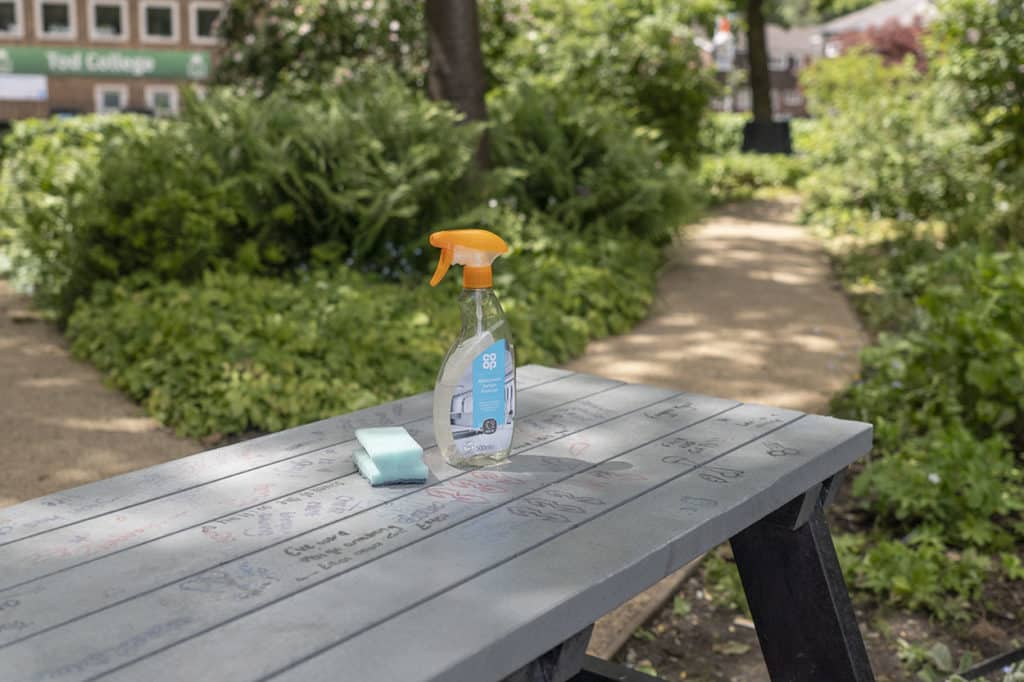
How To Clean Plastic Lumber
One of the biggest selling points of working with recycled plastic instead of timber is just how little maintenance is required. There are no treatments or preservatives needed, and cleaning is incredibly easy.
In certain settings – such as nature reserves or riversides – lichen and algae, or just dirt and dust, can build up on the surface. But with a little hot, soapy water, everything should wipe away.
Our recycled plastic lumber is non-porous, so stains have a tough time sticking. This means most marks are easy to wipe off. You could also use standard kitchen cleaner products for tougher marks or graffiti.
Top Tips for Working With Recycled Plastic
In this guide, we’ve covered all the best practises for cutting, fixing and maintaining artificial lumber. We’ve also gathered some top tips from Marcus in our warehouse team to help you get the most out of your lumber.
- Keep the work area clean
- Use a clamp to work out warping – warping that occurs during storage can be reversed by using a clamp while cutting.
- Work in pairs – take precautions and use safe lifting processes to avoid strain or injury.
- Use protective eyewear
- Slow and steady – for a smooth, easy cut or drill, use the machine at a slow, steady speed.
Still have questions? Feel free to get in touch with our helpful technical team, available 5 days a week on info@britishrecycledplastic.co.uk or 01422 419 555.
Written by the British Recycled Plastic team
April 2026
British Recycled Plastic’s plastic lumber can be used in just about any project where wood and timber would be the go-to choice. The advantages of using plastic lumber are:
- There’s no risk of rotting, splintering, or warping
- It’s UV-resistant, staying looking fresh for longer
- No treatments, painting or preserving required
- Fully sustainable
- Wipes cleans
- Comes with a 25-year guarantee
Traditional timber comes with a long-term, repair and replace cycle, which recycled plastic lumber removes entirely. While the upfront cost is often a deterrent, it is more cost-effective over time.
Recycled plastic works like wood in most scenarios, but how you work with the material differs and factors such as thermal expansion need to be considered. Its crucial that you follow our technical Guidance on our Lumber Page.
For example, we would never recommend stapling, nailing or welding plastic lumber. At British Recycled Plastic, we always suggest pre-drilling holes and using mechanical fixings.
You don’t need to paint plastic lumber. Our recycled plastic lumber is available in a range of colours, reducing the need for painting or finishing. While it is technically possible to paint recycled plastic, the material has a non-porous surface, meaning paint does not adhere well and is likely to peel or flake over time.
British Recycled Plastic lumber is designed to retain its colour and appearance without painting, staining, or sealing. With built-in UV resistance and long-term durability, recycled plastic lumber maintains its look for years, making it a low-maintenance alternative to traditional timber.
Recycled plastic lumber is a long-lasting, low-maintenance alternative to traditional timber, manufactured from 100% recycled plastic materials. Designed for durability, it resists rot, moisture, insects, and weather damage, making it ideal for outdoor uses such as decking, fencing, garden furniture, and landscaping structures. Unlike wood, recycled plastic lumber does not require painting, staining, or ongoing treatment, reducing both maintenance costs and labour over time.
As a sustainable building material, British Recycled Plastic’s goal is to help divert waste from landfills and support a circular economy, transforming used plastics into high-performance construction products. It offers the natural appearance of wood while delivering superior longevity, making it a practical and environmentally responsible choice for residential, commercial, and public space projects.
The best fixings for plastic lumber, and the only fixings we recommend at British Recycled Plastic, are stainless steel bolts and screws. Whether that’s for boardwalks, platforms or anything else. Nails, staples and other fixings won’t bite into the material, correcting and will quickly need replacing.
We advise against burying a screwing plastic lumber directly because stainless steel screws are relatively soft for the extremely dense plastic. Driving a screw straight in without a pilot hole could cause the screw to strip, snap or bind too tightly, making it difficult to remove later down the line. A simple pilot hole removes this risk, making installation far easier.
How To Properly Size A Pilot Hole
When you drill plastic lumber, the pilot hole should match the diameter of the screw shank – not the thread. This ensures the screw goes in smoothly without excessive force and provides a clean and consistent result every time.
You can find out more detailed information on cutting, drilling and screwing plastic lumber in our British Recycled Plastic guide.
Yes, British Recycled Plastic can cut your material to your specified sizes for a small charge (see price list).